 Pay for your PC in installments (up to 12 payments)
AMD Zen 5 / Ryzen 8000 Series - A giant leap in the world of processors
Competition in the processor market is fierce. With many manufacturers such as Apple and Qualcomm, the two key players remain AMD and Intel. Recently, AMD—also known as the “Red Team”—has decided to intensify the competition by confirming its Ryzen 8000 AM5 processors. These chips will feature the Zen 5 CPU architecture and the Navi 3.5 graphics architecture.
Zen 5 and Navi 3.5 - The core of the Ryzen 8000
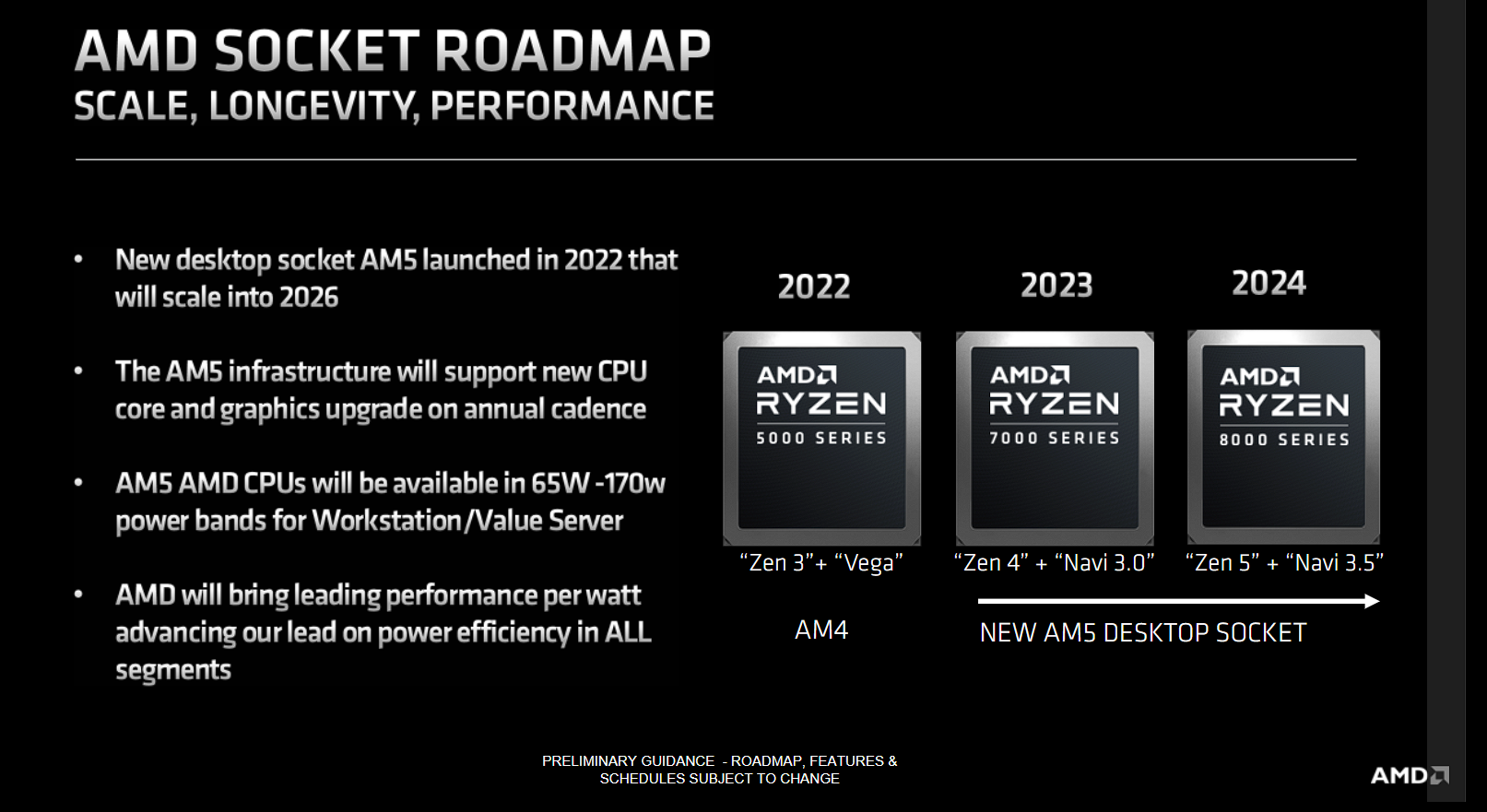
AMD has confirmed that it will launch its next generation of Ryzen processors in 2024. The Ryzen 8000 series will use the new Zen 5 architecture and the Navi 3.5 graphics. These chips, codenamed “Granite Ridge”, will offer up to 16 CPU cores. The Navi 3.5 GPU will be a trimmed-down version of Navi 3, which will improve clock speeds and efficiency.
The Ryzen 8000 series will represent a significant upgrade over the current Ryzen 7000 series. The Zen 5 CPU cores are expected to deliver a 15% performance increase over Zen 4, while the Navi 3.5 GPU is expected to deliver a 20% performance increase over the Navi 3. This will make the Ryzen 8000 the most powerful AMD desktop processors to date.
The benefit of backward compatibility
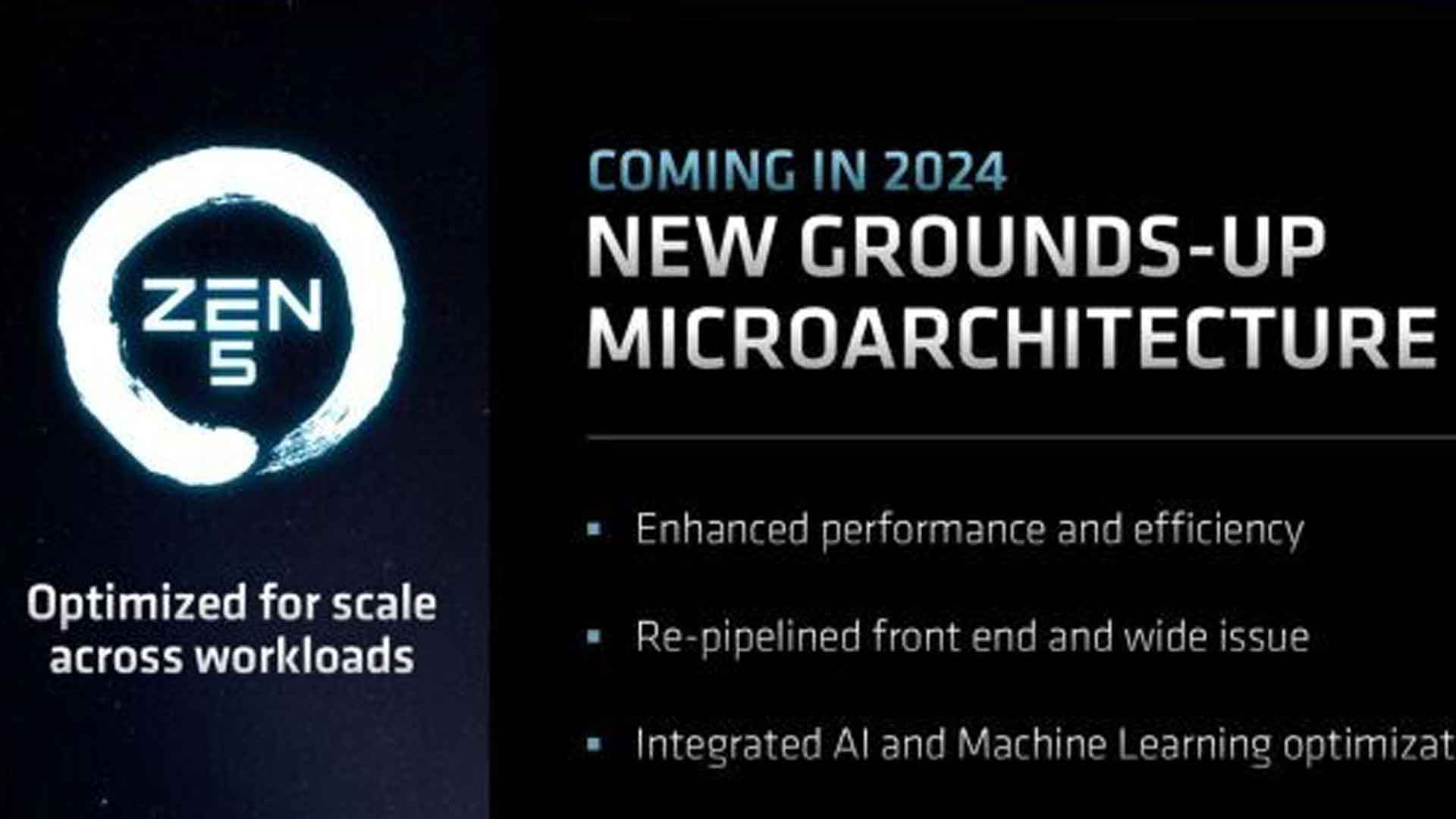
AMD’s backward compatibility policy is one of the secrets behind its success. In the past, Intel would change the socket almost with every new processor generation, forcing users to buy a new motherboard alongside the CPU. AMD changed this by making backward compatibility standard.
With Ryzen 7000, AMD announced the AM5 socket and claimed it would be supported up to 2025. In other words, Ryzen 8000 CPUs will use the AM5 platform and will likely work with motherboards from the previous generation (A620, B650 and X670).
More than just rumours: improved performance
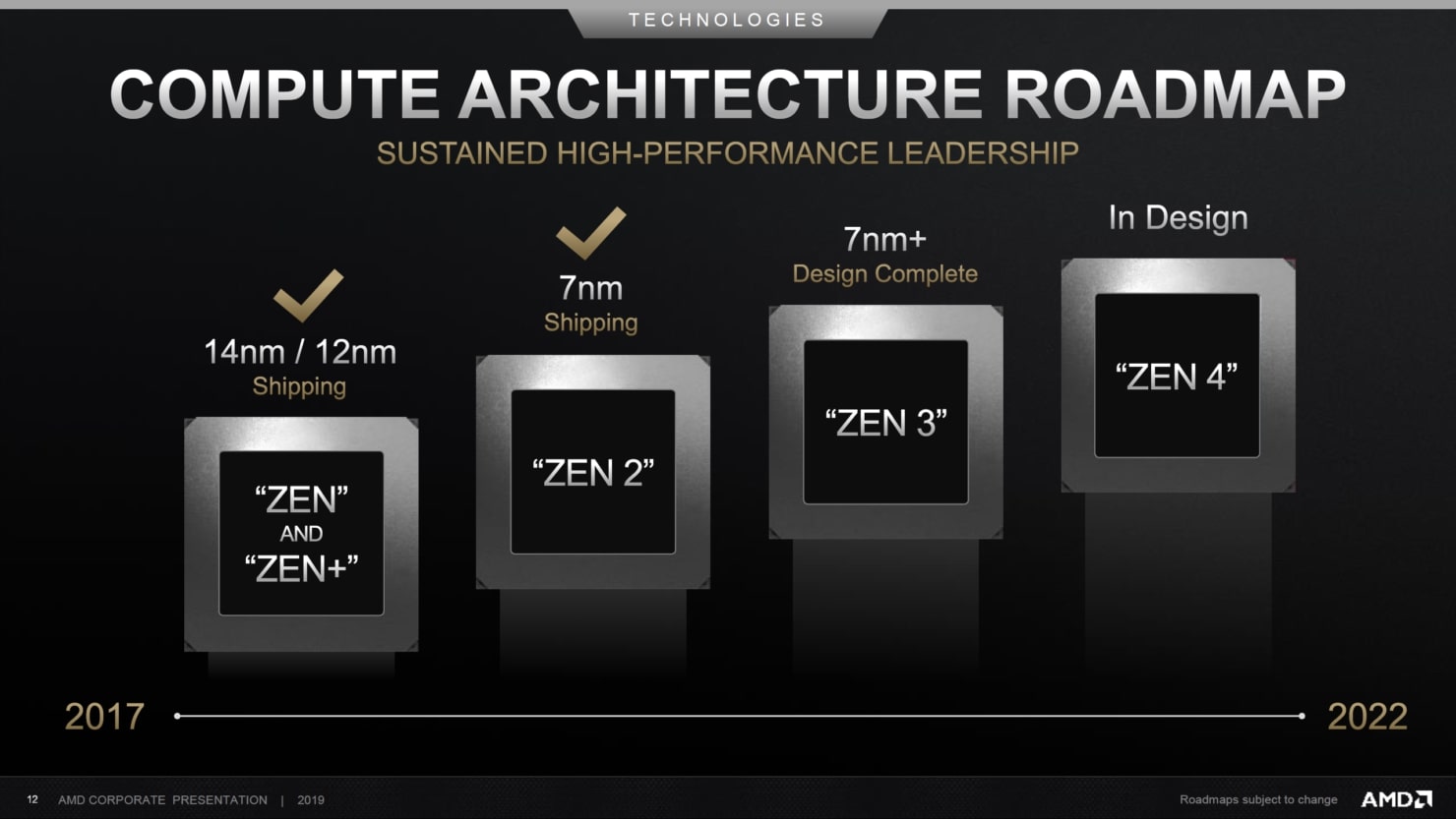
According to AMD, this new microarchitecture will bring better performance and improved efficiency. They also plan to implement AI and machine-learning optimisations, which could mean further performance improvements in the future.
In addition, there are rumours that AMD’s future architecture could be similar to Intel’s hybrid/big.LITTLE CPUs—i.e. it would split the CPU into performance cores and efficiency cores. This would help AMD fit far more cores into a processor while keeping power consumption low.
A look at the future of processors
The Ryzen 8000 could very likely come with 3D V-Cache for even more gaming performance. However, it is not yet certain whether AMD will add stacked 3D cache to all CPUs or only to a select few, as they did with the Ryzen 7000.
It was initially suggested that AMD would take a similar approach to Intel with Zen 5 and add performance + efficiency cores, to increase the number of cores in its CPUs. This would help it catch up with Intel’s strong multi-threaded performance.
However, a leak from RedGamingTech suggests that Zen 5 might not be that different from Zen 4, sticking to 8 cores per CCX. But AMD hasn’t increased the number of cores for a few generations now, so the Ryzen 8000 is expected to have more cores. A Ryzen with 16 cores per CCX is therefore entirely plausible, opening up the possibility of a flagship 32-core product.
The same leak mentions that Zen 5 could deliver a 30% IPC gain (at best) over Zen 4. Realistically, you should expect an IPC increase of 15% to 25%. A much better IPC paired with higher boost clocks should bring serious performance gains over the previous generation CPUs.
Changes to expect
Big changes are also expected for L1, L2 and L3 caches. RedGamingTech has said a little more about this, although these claims should be treated with caution since they are based on rumours.
What about the price?
We’re still a long way off launch day to know the official price of the Ryzen 8000 series, but we expect AMD to stay close to the prices of the Ryzen 7000 processors. However, it’s worth noting that the initial pricing of the Ryzen 7000 CPUs wasn’t exactly satisfying. At times, Intel’s Raptor Lake processors offered better performance while costing less.
So here are our price estimates:
- Ryzen 5 8600X – $279
- Ryzen 7 8700X – $349
- Ryzen 9 8900X – $549
- Ryzen 9 8950X – $699
If AMD decides to launch regular variants and X3D versions, CPUs with 3D V-Cache should cost more. Here’s what we think the price will be:
- Ryzen 7 8800X3D – $509
- Ryzen 9 8900X3D – $649
- Ryzen 9 8950X3D – $799.
Conclusion
In conclusion, AMD’s Ryzen 8000 series appears to be a significant step forward in the evolution of processor technology. With major improvements in performance, efficiency and compatibility, the Ryzen 8000 is certainly a processor worth keeping an eye on when it launches in 2024.
