
By the FlowUP team, gaming PC builder in Genappe (Belgium) · Updated 29 September 2026
In brief: no, the RTX 5070 Ti and RTX 5060 Ti 16 GB haven’t been discontinued. In January 2026, articles announced their “end of life” at ASUS; ASUS replied with an official statement: no discontinuation, but irregular stock due to memory supply constraints. The 16 GB versions are the most affected, because they contain more memory chips. If one of them is unavailable or too expensive, two sensible alternatives are the RTX 5070 12 GB (around 30% faster than a 5060 Ti 16 GB at 1440p) or the Radeon RX 9070 XT 16 GB, on par with the 5070 Ti.
What happened in January 2026
Mid-January 2026, several websites picked up a rumour: ASUS had put its RTX 5070 Ti and RTX 5060 Ti 16 GB into “end of life”, due to a lack of video memory. The information spread quickly because it coincided with a spike in memory prices.
ASUS issued an official statement to refute it: the two cards aren’t discontinued, but memory supply constraints disrupt production and replenishment cycles. In other words: fewer batches, occasional stockouts, and more volatile prices, without stopping the line. To our knowledge, NVIDIA hasn’t announced an end to these chips.
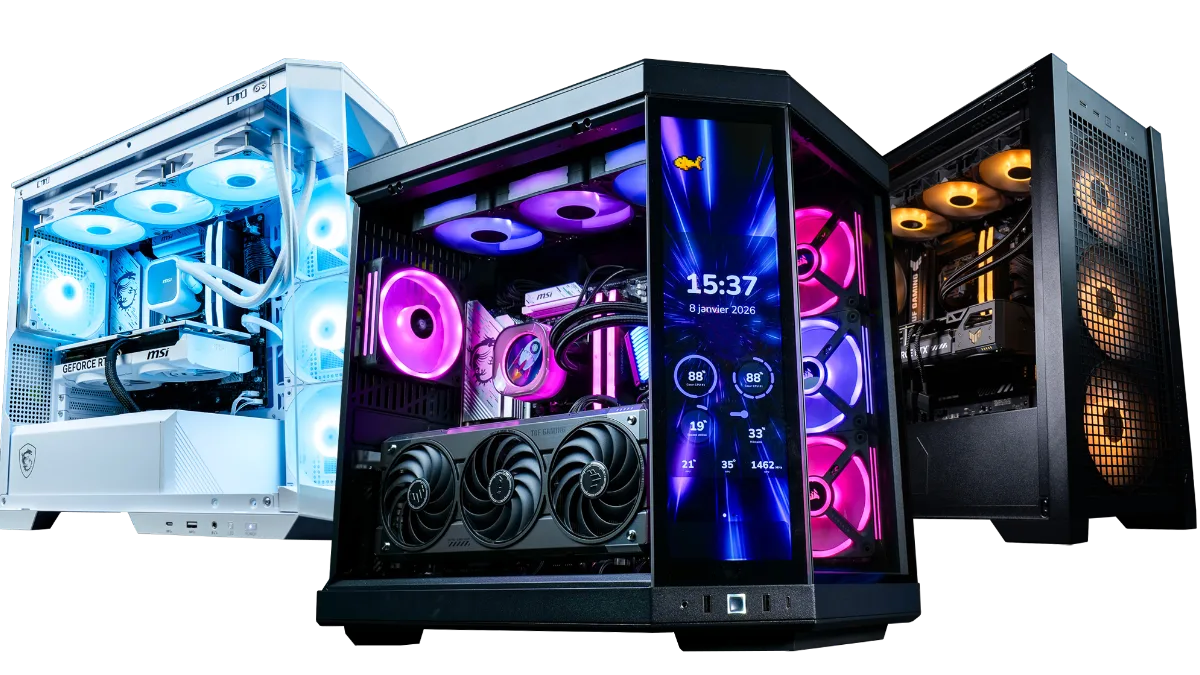
In September 2026, the RTX 5070 Ti and 5060 Ti 16 GB are still listed, but availability remains irregular.
Why the 16 GB versions are hit hardest
A 16 GB graphics card physically contains more GDDR7 memory chips than an 8 GB card: that’s the case with the RTX 5060 Ti 16 GB versus its 8 GB version. When memory runs short, the card makers (ASUS, MSI, Gigabyte…) logically prioritise the models they can produce in volume. The models that use the most memory therefore become the most scarce, and their prices move the most.
That’s not specific to NVIDIA: AMD has also warned that the higher cost of components would be reflected in the prices of Radeon cards. Switching brands can help you find an available card, but it won’t help you escape the trend.
Which card should you choose if the 16 GB version can’t be found?
| Card | Video memory | Ultra 1080p | Ultra 1440p | Ultra 4K | US launch price |
|---|---|---|---|---|---|
| RTX 5060 Ti 8 GB | 8 GB | 100.4 FPS | 68.6 FPS | 28.1 FPS | $379 |
| RTX 5060 Ti 16 GB | 16 GB | 105.2 FPS | 73.4 FPS | 40.2 FPS | $429 |
| RX 9060 XT 16 GB | 16 GB | 98.3 FPS | 67.3 FPS | 35.2 FPS | $349 |
| RTX 5070 | 12 GB | 132.6 FPS | 96.4 FPS | 54.3 FPS | $549 |
| RTX 5070 Ti | 16 GB | 155.4 FPS | 116.8 FPS | 68.6 FPS | $749 |
| RX 9070 XT | 16 GB | 156.6 FPS | 116.5 FPS | 65.8 FPS | $599 |
Source: Tom’s Hardware, graphics card rankings (average of 11 games in rasterisation, without upscaling), updated 24 June 2026 and accessed 29 September 2026. US launch prices excluding tax, as a reference.
This table says three things. First, between the RTX 5060 Ti 8 GB and 16 GB, the gap is small at 1080p and 1440p, but huge at 4K (28 vs 40 FPS): it’s video memory that limits performance, and that will become increasingly true with upcoming games. Next, the RTX 5070 is about 30% faster than the 5060 Ti 16 GB at 1440p, with 12 GB: a better choice if you mainly game at 1440p. Finally, the RX 9070 XT matches the RTX 5070 Ti in rasterisation; GeForce has the edge in ray tracing and with DLSS.
To go further: our review of the RTX 5070, our comparison RX 9070 and RX 9070 XT, and the guide how to choose your graphics card in 2026.
Buy a pre-built PC rather than the card on its own?
When the price of a graphics card changes from week to week, thinking in terms of a complete PC makes things simpler. A system builder buys components in bulk and spreads out the variations across the whole machine; you end up seeing a final price, not the yoyo of each individual part.
We’re not going to pretend you can escape the shortage: we depend on deliveries as well, and some configurations switch to “made to order”. On the other hand, every PC is assembled and tested in our workshop in Genappe, with a power supply and a case sized for the card, so you avoid nasty surprises from a rushed build around whatever card was in stock.
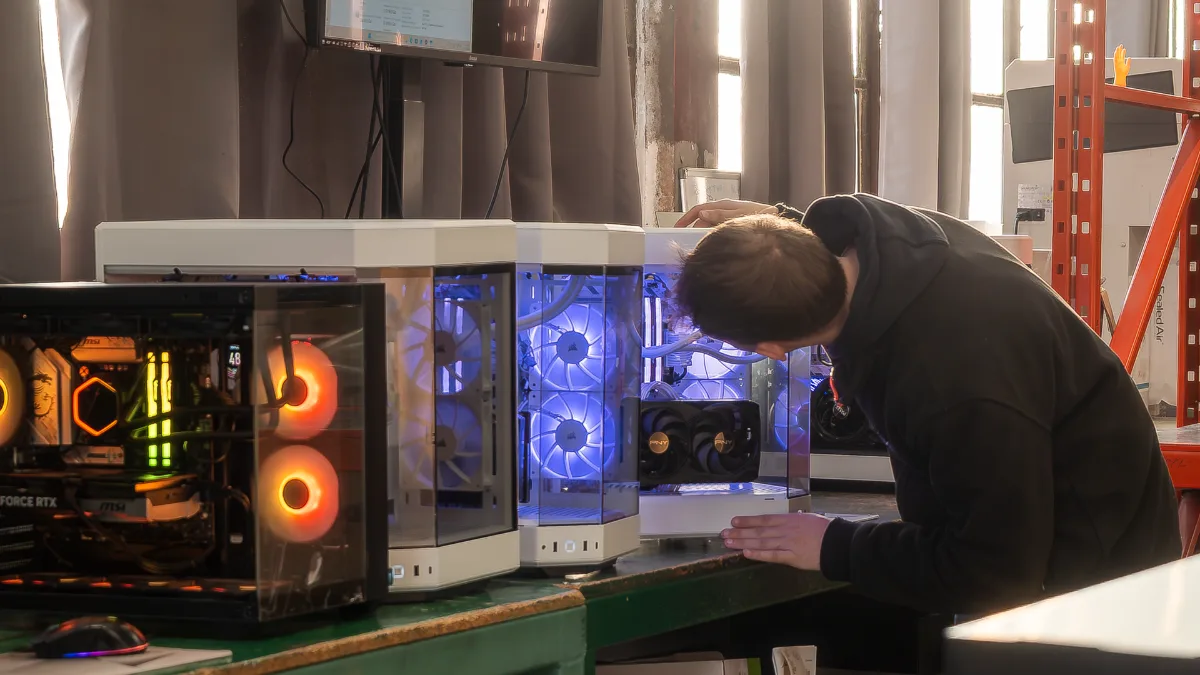
Each PC is assembled and tested in Genappe, with a power supply sized for the graphics card.
Our PCs with RTX 5060 Ti 16 GB, RTX 5070 Ti or RX 9070 XT
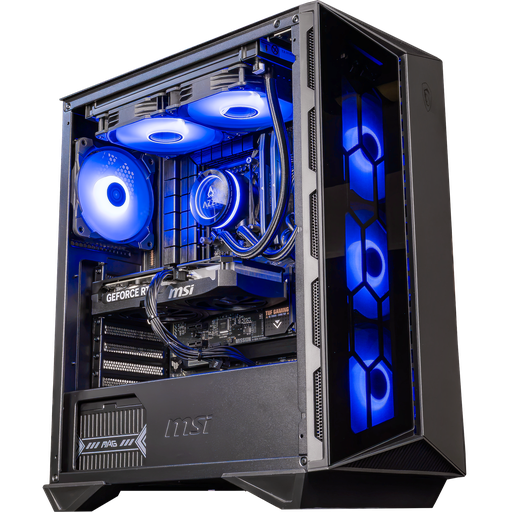
Swift PC: RTX 5060 Ti 16 GB
The RTX 5060 Ti in its 16 GB version: extra headroom of video memory for 1080p and 1440p.
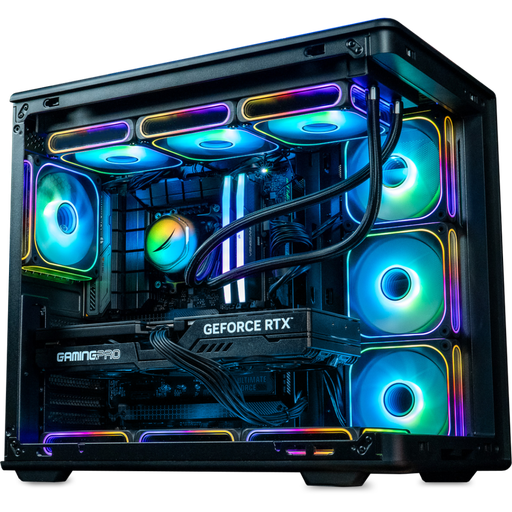
Rainbow V2 PC: RTX 5070 Ti 16 GB
RTX 5070 Ti 16GB and a choice of processors: 1440p at very high settings and 4K with DLSS.
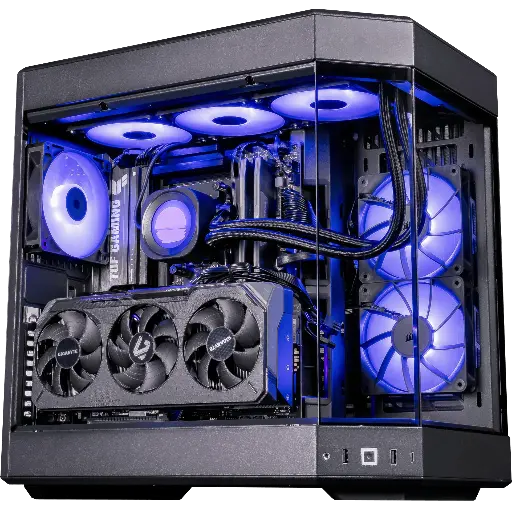
Shadow V2 PC: the RX 9070 XT alternative
Radeon RX 9070 XT 16GB and Ryzen 7 9800X3D: the level of an RTX 5070 Ti in rasterisation.
FAQ: RTX 5070 Ti and RTX 5060 Ti 16GB
Is the RTX 5070 Ti end-of-life?
No. The January 2026 rumour was denied by ASUS, which talks about irregular stock related to memory, not a shutdown. To our knowledge, NVIDIA has not announced an end-of-life for the RTX 5070 Ti.
Why is the RTX 5060 Ti 16GB hard to find?
Because it has twice as much video memory as the 8GB version, in a context of a memory shortage. Card makers produce fewer of them, and irregularly.
RTX 5070 12GB or RTX 5060 Ti 16GB?
At 1440p, the RTX 5070 is about 30% faster. The 5060 Ti 16GB keeps more video memory, which is useful for very heavy textures and longevity. To play in 1440p today, the 5070 is the best choice.
What is the AMD alternative to the RTX 5070 Ti?
The Radeon RX 9070 XT 16GB, at the same level in rasterisation. The GeForce stays ahead in ray tracing and with DLSS.
Is the RTX 5060 Ti 8GB enough?
In 1080p, yes in most games. In demanding 1440p and in 4K, its 8GB limits it already: at 4K it loses nearly a third of its FPS compared with the 16GB version.
