
By the FlowUP team, gaming PC builder in Genappe (Belgium) · Updated 30 September 2026
In short: the GeForce RTX 40 series (Ada Lovelace architecture) launched between October 2022 and January 2024, from the RTX 4060 up to the RTX 4090. In 2025 it was replaced by the RTX 50. In 2026, the comparisons are straightforward: the RTX 4090 is still ahead of the RTX 5080, the RTX 4080 is equivalent to an RTX 5070 Ti, the RTX 4070 Ti to an RTX 5070, and the RTX 4060 is behind the RTX 5060. The big difference: only the RTX 50 have multiple image generation for DLSS 4.
The RTX 40 series, what is it?
This is the generation of GeForce graphics cards launched by NVIDIA with the RTX 4090 on 12 October 2022, based on the Ada Lovelace architecture. It brought DLSS 3 and image generation, along with clearly better power efficiency than the RTX 30. The Super versions (4070 Super, 4070 Ti Super, 4080 Super) arrived in January 2024.
Since 2025, it’s the RTX 50 (Blackwell architecture) that equip new PCs. The RTX 40 cards remain very common, especially on the second-hand market, and that’s where the question arises: how do they stack up against the new ones?
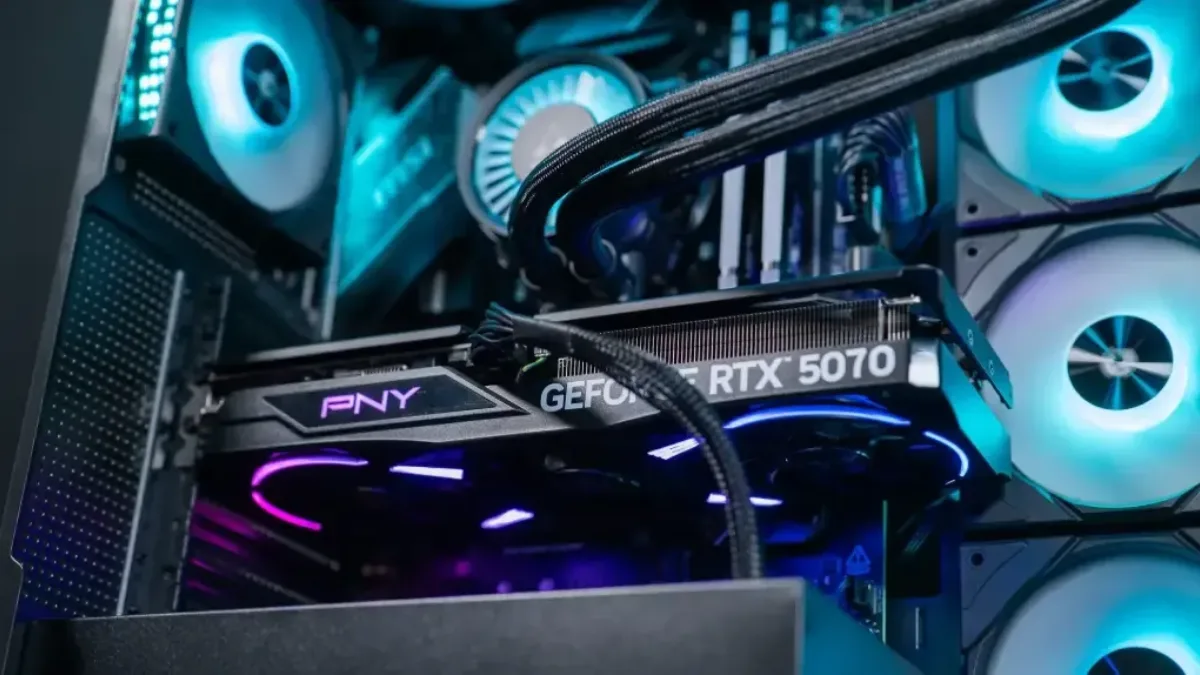
The RTX 40 have made way for the RTX 50 in our new PCs, but they still remain very common on the second-hand market.
RTX 40 vs RTX 50: performance
| Graphics card | Ultra 1080p | Ultra 1440p | Ultra 4K |
|---|---|---|---|
| RTX 4090 | 183.6 FPS | 143.4 FPS | 89.1 FPS |
| RTX 5080 | 166.9 FPS | 128.3 FPS | 77.4 FPS |
| RTX 4080 Super | 158.9 FPS | 118.6 FPS | 69.4 FPS |
| RTX 4080 | 157.3 FPS | 117.5 FPS | 67.5 FPS |
| RTX 5070 Ti | 155.4 FPS | 116.8 FPS | 68.6 FPS |
| RTX 4070 Ti Super | 141.2 FPS | 104.0 FPS | 58.5 FPS |
| RTX 4070 Ti | 135.1 FPS | 97.9 FPS | 53.9 FPS |
| RTX 5070 | 132.6 FPS | 96.4 FPS | 54.3 FPS |
| RTX 4070 Super | 126.7 FPS | 91.2 FPS | 49.2 FPS |
| RTX 4070 | 111.5 FPS | 77.8 FPS | 41.3 FPS |
| RTX 5060 Ti 16 GB | 105.2 FPS | 73.4 FPS | 40.2 FPS |
| RTX 4060 Ti 16 GB | 89.3 FPS | 60.5 FPS | 31.3 FPS |
| RTX 5060 | 88.5 FPS | 59.8 FPS | 21.8 FPS |
| RTX 4060 | 71.5 FPS | 47.6 FPS | 17.4 FPS |
Source: Tom's Hardware, GPU ranking (average of 11 games in rasterisation, without upscaling, Ryzen 7 9800X3D), updated 24 June 2026.
What the RTX 50 have extra
At the same rasterisation performance, the difference comes down to the features. The RTX 40 benefit from DLSS 4 for upscaling and standard image generation, but not the multiple image generation, which is reserved for the RTX 50 and multiplies the images shown in compatible games. The RTX 50 also move to faster GDDR7 memory. To understand everything, read our article on the RTX 5000 series.
Should you buy an RTX 40 in 2026?
Our builder’s take: brand new, no, equivalent RTX 50 models offer the same performance with the extra features. On the second-hand market, an RTX 4070 Super, a 4070 Ti Super, or a 4080 can be a good deal if the price is clearly lower than a new RTX 5070 or 5070 Ti. Be careful, however, with the RTX 4060 Ti 8 GB and the RTX 4060: they’re a bit short on video memory for recent games. To compare calmly, follow the method for choose your graphics card in 2026.
Our PCs with an RTX 50
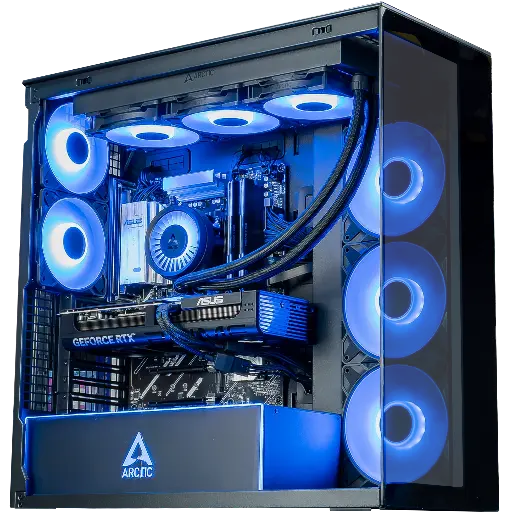
Cheetoh PC: RTX 5070
RTX 5070, Ryzen 7 X3D and DDR5: the performance of an RTX 4070 Ti, with full DLSS 4.
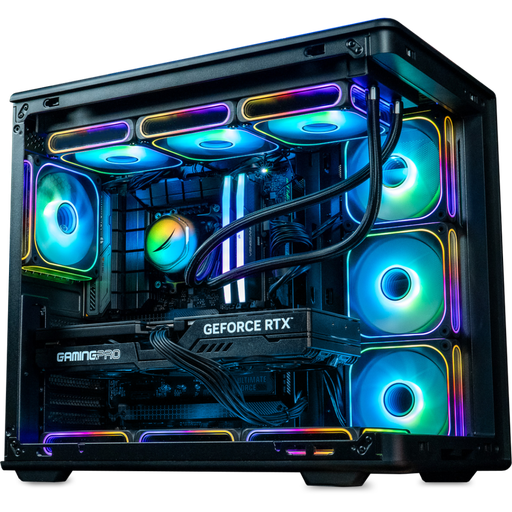
Rainbow V2 PC: RTX 5070 Ti
RTX 5070 Ti 16 GB, on par with an RTX 4080, with a Core i7 14700KF or a Ryzen 7 X3D.
FAQ: RTX 40 series
When did the RTX 4000 series launch?
The RTX 4090 launched on 12 October 2022, followed by the other models up to the RTX 4060 in 2023, and then the Super versions in January 2024.
Which RTX 50 corresponds to an RTX 4080?
The RTX 5070 Ti: they’re neck and neck in rasterisation, according to Tom's Hardware.
Is the RTX 4090 more powerful than the RTX 5080?
Yes, in rasterisation: about 10% faster in 1080p and 15% faster in 4K, according to Tom's Hardware. The RTX 5080 has multiple image generation from DLSS 4 on its side.
Do the RTX 40 have DLSS 4?
Yes for upscaling and standard image generation, no for multiple image generation, reserved for the RTX 50.
Is the RTX 4000 Ada a GeForce RTX 40?
No. The RTX 4000 Ada Generation is a NVIDIA professional card, with 20 GB of memory, designed for workstations and not for gaming.
