 Your PC in instalments (up to 12x)
By the FlowUP team, PC gaming system builder in Genappe (Belgium) · Updated 28 September 2026
In short: yes, the Ryzen 7 7800X3D remains an excellent gaming processor in 2026. The 9800X3D is, on average, 8% faster according to TechSpot (1080p, RTX 5090, September 2025), with peaks of over 20% in a few very CPU-demanding games. At 1440p and 4K, the gap shrinks because the graphics card becomes the limiting factor. If you can find it noticeably cheaper than the 9800X3D, it’s still one of the best performance-for-money options on AM5.
For almost two years, the Ryzen 7 7800X3D was THE benchmark for gaming. Eight cores, a huge stacked cache on the chip, and frame rates that even the Core i9 struggled to keep up with, while using ridiculously low power.
Then the 9800X3D arrived in late 2024, and the 9850X3D in early 2026. So, dethroned king? Not so fast. We looked at the numbers from independent tests, cross-referenced them with what we see in the workshop, and the verdict is more nuanced than “the newest one wins”.

7800X3D, 9700X, 9800X3D, 9850X3D: the spec sheets
All four processors have eight cores and sixteen threads. What sets them apart is the architecture, the clock speed, and above all whether or not they have 3D V-Cache.
| Ryzen 7 7800X3D | Ryzen 7 9700X | Ryzen 7 9800X3D | Ryzen 7 9850X3D | |
|---|---|---|---|---|
| Architecture | Zen 4 | Zen 5 | Zen 5 | Zen 5 |
| Cores / threads | 8 / 16 | 8 / 16 | 8 / 16 | 8 / 16 |
| Base clock / boost | 4.2 / 5.0 GHz | 3.8 / 5.5 GHz | 4.7 / 5.2 GHz | 4.7 / 5.6 GHz |
| L3 cache | 96 MB | 32 MB | 96 MB | 96 MB |
| 3D V-Cache | Yes, above the cores | No | Yes, under the cores | Yes, under the cores |
| TDP | 120 W | 65 W | 120 W | 120 W |
| Overclocking | No (multiplier locked) | Yes | Yes | Yes |
Sources: AMD product specifications, Tom’s Hardware (February 2026) for the 9850X3D.
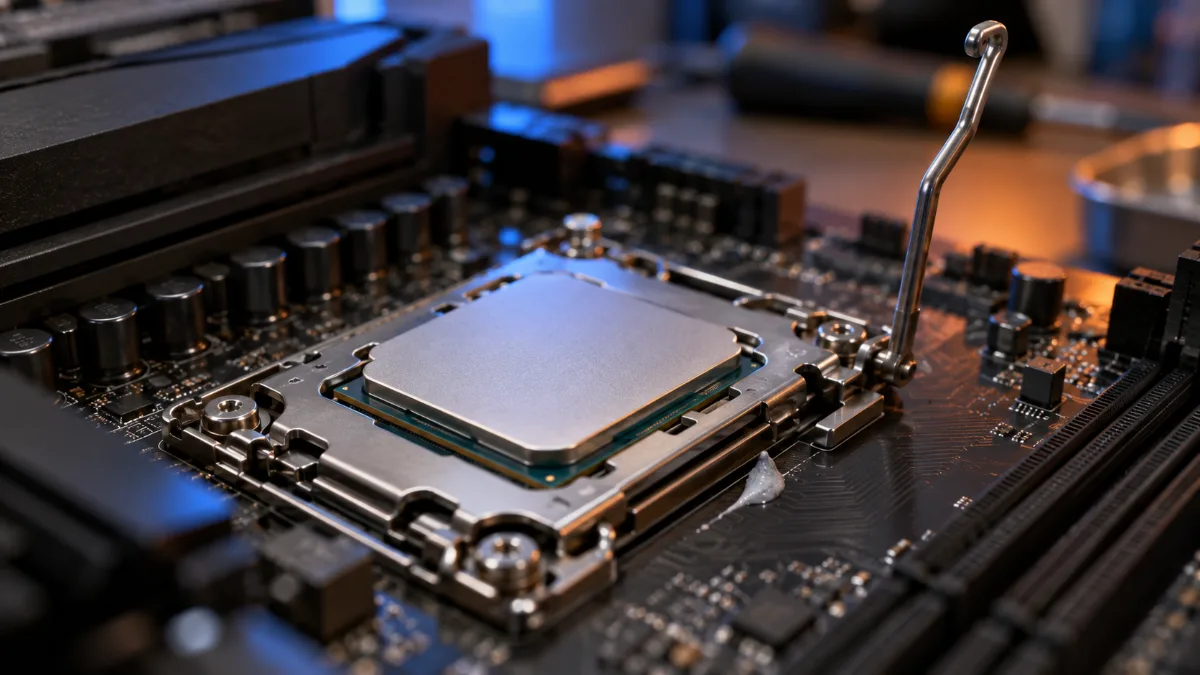
3D V-Cache, explained simply
AMD stacks an additional 64 MB of cache memory on the chip. A game constantly looks for small bits of data (positions, physics, character AI): the more it finds in the cache, the less it has to wait for RAM, and the faster the frames come. That’s why an X3D running at 5 GHz often beats a conventional processor at 5.5 GHz.
On the 7800X3D, this cache sits above the cores and insulates them somewhat from the heatsink/fan, which is why the clocks are more sensible. On the 9000X3D models, AMD moved it underneath: the cores “breathe” better, they can boost higher, and they can be overclocked. For the difference between cores and threads, see our guides on the CPU core and the CPU thread.
What’s the difference in-game between the 7800X3D and the 9800X3D?
Short answer: 8% on average at 1080p. That’s TechSpot’s figure, measured with an RTX 5090 so the graphics card doesn’t bottleneck anything, across 12 games, and it matches their previous test across 45 games. But the average hides real differences depending on the title:
| Game (1080p, RTX 5090) | Lead of the 9800X3D |
|---|---|
| Baldur's Gate 3 | +20% to +23% |
| Assetto Corsa Competizione | +13% to +18% |
| Counter-Strike 2 (medium settings) | +10% |
| Marvel's Spider-Man 2 | +7% to +11% |
| Average across 12 games | +8% |
Source: TechSpot, “AMD Ryzen 7 7800X3D or 9800X3D, Which Should You Buy?”, 23 September 2025.
Keep in mind that this is the most unfavourable scenario for the 7800X3D: the most powerful graphics card on the market, at 1080p. With an RX 9070 XT or a RTX 5070 Ti at 1440p, it’s the graphics card that hits its limit first in most games, and the two processors end up neck and neck. At 4K, the difference becomes almost impossible to see without measurement tools.
And the 9850X3D?
The newcomer clocks up to 5.6 GHz. Tom’s Hardware measures 3.2% better than the 9800X3D at 1080p across 16 games, but with roughly 30% higher power consumption while gaming (106 W vs 81 W). Against the 7800X3D, that therefore amounts to at best around a dozen percent under the same extreme conditions.
7800X3D or 9700X: the cheaper isn’t necessarily the slower
The 9700X is newer, boosts up to 5.5 GHz, and typically costs less. On paper, it should win. In games, it’s often the opposite: without 3D V-Cache, it only has 32 MB of L3 cache, and GamersNexus shows it behind the 7800X3D in most of the games they tested at launch (August 2024).
It gains an advantage elsewhere: 65 W power draw, better results in rendering, compression or compiling thanks to Zen 5. If you spend as much time on Premiere or Blender as on Warzone, that makes sense. For gaming first and foremost, the 7800X3D remains ahead.
FlowUP, test of the Orion RTX 5080 PC, January 2025.
In which cases does the 7800X3D still shine in 2026
- Competitive FPS in 1080p or 1440p at high refresh rates: CS2, Valorant, Fortnite in performance mode. That’s where the cache makes the difference in the minimum frame rates, the ones you feel when the action picks up.
- Simulation and strategy: racing simulators, Microsoft Flight Simulator, big management games. These games love the cache.
- MMO and big battles: when dozens of players appear at the same time, the processor handles it better.
To get the most out of these FPS, you need the right screen: our guide for choosing a gaming monitor helps you find the right refresh rate.

Where it shows its limits
If you’re aiming for the absolute maximum frames per second with an RTX 5090, the 9800X3D or 9850X3D take the crown. And if your day is all about 3D rendering, encoding or compiling, a Ryzen 9 with 12 or 16 cores is far more cost-effective: eight cores are still eight cores.
Best deal: 7800X3D, how to tell if the price is worth it
CPU prices move every week. Instead of a figure that will be wrong in a month, here’s the rule we follow:
- Compare the price gap to the performance gap. The 9800X3D brings about 8% in games in the worst case. If it costs 25 or 30% more, the 7800X3D is the best buy. If the difference falls below 10%, go for the 9800X3D.
- Think in terms of platform. Both use the AM5 socket and DDR5: the DDR5-6000 CL30 kit is the right compromise for X3D, and AMD has confirmed it will support the AM5 socket until 2029 (Tom's Hardware): your motherboard will be able to take a newer processor later.
- Don’t upgrade just to upgrade. Going from a 7800X3D to a 9800X3D to gain a few percentage points is pointless. Your budget is much better spent on the graphics card.
7800X3D or 9800X3D in a FlowUP PC
We offer both processors in two twin PCs: same Radeon RX 9070 XT 16GB graphics card, 32GB DDR5 and a 1TB SSD. The only real choice is the processor. In other words, exactly the question of this article.
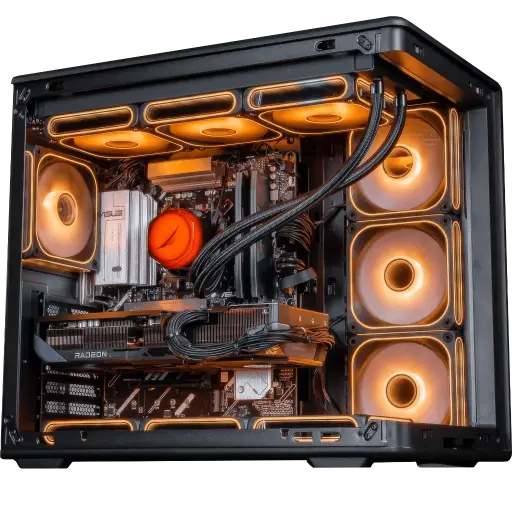
Apex V2 PC: Ryzen 7 7800X3D + RX 9070 XT
The smart choice for gaming at high refresh rate in 1440p and at 4K. The 7800X3D is more than enough to feed the RX 9070 XT in the vast majority of games.
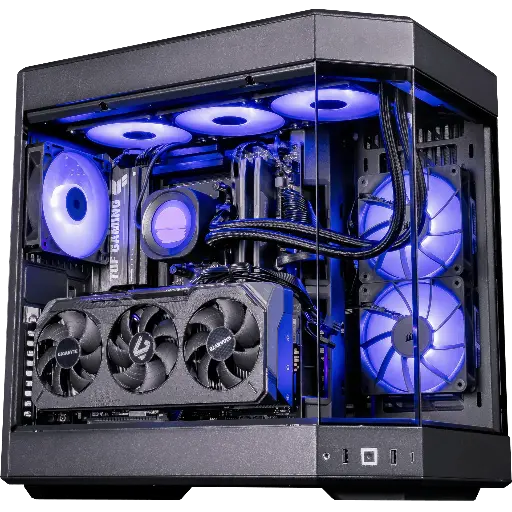
Shadow V2 PC: Ryzen 7 9800X3D + RX 9070 XT
For people who mostly play competitive FPS or simulations, and want some room for a future, more powerful graphics card.
Still unsure about the overall configuration? Our guide for choosing your gaming PC setup goes through every component, and explains what each one does in a gaming PC explains the role of each one.
Verdict: dethroned king or best gaming deal?
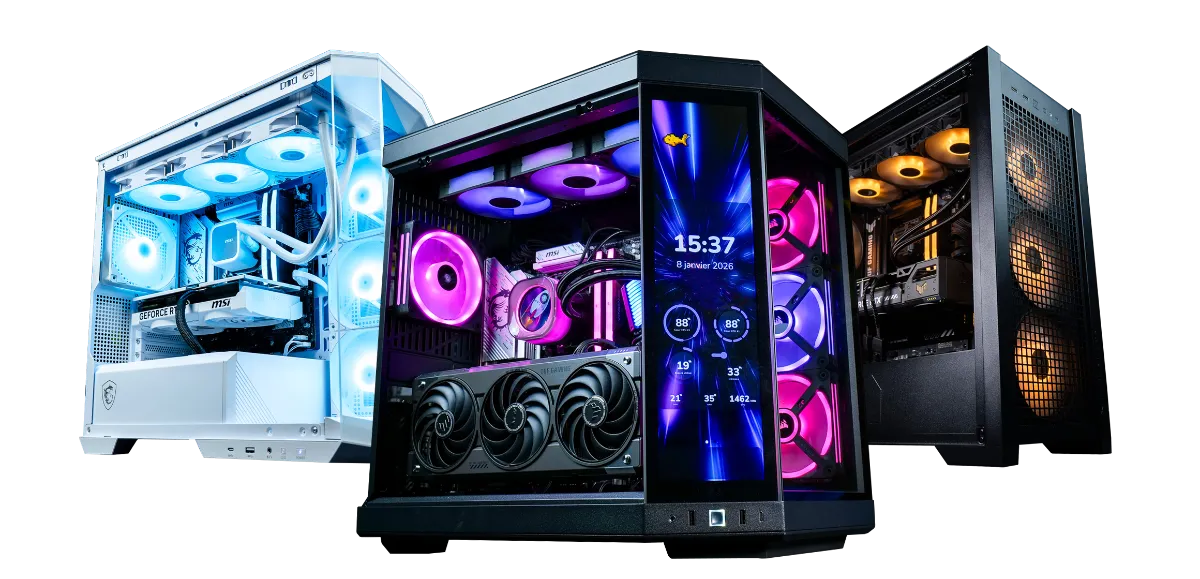
He lost the crown, not his relevance. The 9800X3D and 9850X3D are faster, measured fact. But an average of 8%, in conditions that almost nobody can replicate at home, doesn’t justify any price difference.
Our builder’s take: if you play at 1440p or 4K with a RX 9070 or RTX 5070-series card, the 7800X3D is still a choice we stand by without hesitation. If you want the most in competitive 1080p, or want to keep the door open for a very high-end card, go for a 9800X3D.
FAQs about the Ryzen 7 7800X3D
Is the Ryzen 7 7800X3D still good in 2026?
Yes. It’s still one of the fastest gaming CPUs, at around 8% behind the 9800X3D on average in 1080p, according to TechSpot, and the gap shrinks even further at 1440p and 4K.
Is the 7800X3D Zen 4 or Zen 5?
Zen 4. It was released in April 2023. The 9800X3D and 9850X3D use the Zen 5 architecture, with the 3D V-Cache placed under the cores.
What’s the difference between the 7800X3D and the 9800X3D?
The 9800X3D switches to Zen 5, boosts to 5.2 GHz instead of 5.0 GHz, supports overclocking, and places its cache under the cores for better cooling. In games, it’s on average 8% faster, up to over 20% in some titles like Baldur’s Gate 3.
Should you switch from a 7800X3D to a 9800X3D?
No. The gain is too small for the price of a new processor. Upgrading your graphics card will bring you much more.
Which graphics card should you pair with the 7800X3D?
It handles a RX 9070 XT, a RTX 5070 Ti or a RTX 5080 without any trouble. Even with a RTX 5090 in 4K, it’s usually the graphics card that’s the limiting factor in most games.
What cooling for a 7800X3D?
Its TDP is 120 W and it consumes little in games. A good dual-tower air cooler or a 240 mm AIO liquid cooler is more than enough. Its temperature may seem high, that’s normal for this processor: the cache above the cores slightly reduces heat dissipation.
