 Pay for your PC in installments (up to 12 payments)
Should you buy Intel’s 14th-generation processors?
In the fast-moving world of technology, every new CPU announcement is eagerly awaited—especially when it comes from a giant like Intel. Intel’s 14th-generation Raptor Lake Refresh CPUs are no exception to this rule. Anticipated particularly by the gaming community, these new processors promise improved performance and technical innovations that could well shake up the market.
But what makes this new generation so special? And why all the excitement around these chips?
Let’s dive together into the technical details and find out what these newcomers have to offer.
Technical specifications of Intel’s new chips
When talking about processors, the technical specifications are often at the heart of the discussion. And for good reason: they largely determine the performance and capabilities of these chips. Intel’s 14th generation doesn’t break this rule and offers tempting specifications.
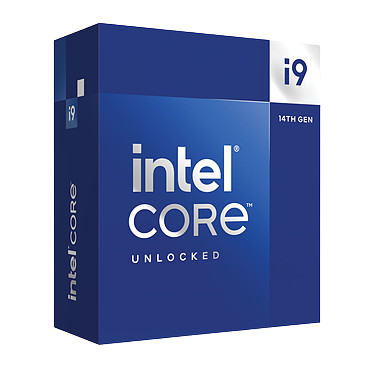
Intel Core i9-14900K
This high-end model is expected to offer 16 cores and 32 threads in an 8+16 configuration. With base clock speeds of 3.2 GHz and a maximum Turbo Boost frequency of 6.0 GHz, it promises to be a real powerhouse for the most demanding tasks.
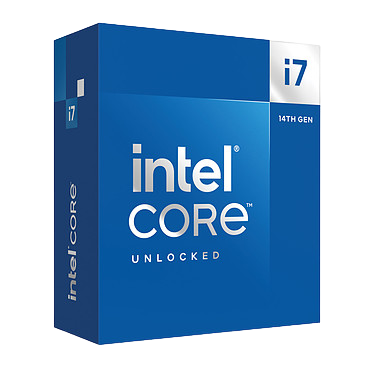
Intel Core i7-14700K
Stepping a little back from the i9, this processor should still offer 20 cores and 28 threads in an 8+12 configuration. Its base clock speed is 3.4 GHz, with a maximum Turbo Boost of 5.6 GHz. Also worth noting: this model should feature 33 MB of cache, compared with 30 MB on the 13th-generation chip.
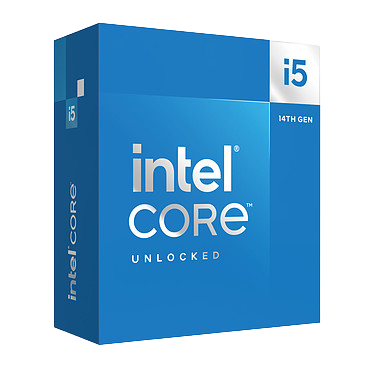
Intel Core i5-14600K
Designed for those looking for a good balance between performance and price, this processor should have 6 cores and 8 threads in a 6+8 configuration. Its base clock speed is 3.3 GHz, with a maximum Turbo Boost of 5.3 GHz.
By comparing these new chips with the previous generation, we can see small increases in clock speeds across all models. What’s more, the i7-14700K stands out with even more cores, providing extra power for demanding users.
Architecture and fabrication
Beyond mere specifications, a processor’s architecture and fabrication play a crucial role in its overall performance, energy efficiency, and compatibility with other components.
- Raptor Lake architecture: This new generation of Intel chips is based on the Raptor Lake architecture. Although it’s similar to that of the previous generation, it brings notable improvements in terms of performance and efficiency.
- Fabrication: Intel continues to use the same fabrication process as the previous generation. This means that, although performance is improved, the physical size of the transistors remains the same. It’s a choice that can have implications for power consumption and heat dissipation.
- Support for DDR5 DIMM modules: One of the major advances of this generation is support for DDR5 DIMM modules. These new memory modules offer faster speeds, leading to improved overall performance — particularly for memory-intensive tasks.
- Power consumption and compatibility: With higher clock speeds, you can expect a slight rise in power consumption. However, Intel has worked to maintain a balance between performance and power use. In addition, these new processors should be compatible with existing LGA 1700 / 1800 motherboards, which is great news for anyone considering an upgrade without changing their motherboard.
To conclude this section, although Intel’s 14th generation is built on a similar foundation to the previous generation, it also brings its share of innovations and improvements that make it unique.
Processor performance
Technical specifications and architecture are certainly important, but what most users are primarily looking for is real-world performance. How do these new chips perform in actual use?
- Comparison between the i9-14900K and the i7-14700K: In terms of raw power, the i9-14900K stands out, coming in at roughly 15 to 20% better than the i7-14700K across all the measured points. It’s a noticeable difference that justifies the i9’s high-end positioning.
- Impact of the test setup : It is essential to note that performance can vary depending on the configuration used for the tests. For example, the test machine used for the benchmarks was equipped with 16 GB of DDR5 memory, an Nvidia RTX 4090 graphics card, and a 1920 x 1080 pixel display. While this amount of RAM is substantial, it may not be enough for the processors to realise all of their potential.
- Comparison with the previous generation : When comparing the new chips with their predecessors, you can see slightly higher clock speeds. For example, the i9-14900K reaches 6.0 GHz compared with 5.8 GHz for its predecessor, and the i7-14700K reaches 5.6 GHz compared with 5.4 GHz for the previous generation.
In short, Intel’s 14th generation brings notable performance improvements, even if some results may be influenced by the test configuration. These new chips promise an enhanced user experience, whether for gaming, content creation, or demanding professional tasks.
Conclusion
Intel’s 14th-generation Raptor Lake Refresh CPU marks another step in the ongoing evolution of processor technologies. With notable improvements in terms of specifications, architecture, and performance, these new chips reflect Intel’s commitment to pushing the boundaries of what is technically possible.
Gamers, professionals, and technology enthusiasts have good reasons to be excited. Whether it’s a smoother gaming experience, faster content-creation tasks, or improved efficiency in professional applications, these processors look ready to meet users’ needs.
With a launch scheduled for October, all that’s left is to wait and see how these chips are received by the market and how they perform in real-world conditions. One thing is certain: the future looks promising for tech aficionados.
