
By the FlowUP team, gaming PC builder in Genappe (Belgium) · Updated 28 September 2026
In short: an IPS panel delivers accurate, stable colours from all angles, with blacks that are slightly greyish (typical contrast around 1,000:1). A VA panel shows much deeper blacks (often 2,500:1 to 4,000:1) but can leave smearing in dark scenes. For competitive gaming, go for a Fast IPS. For single-player gaming and movies in a dark room, a VA is often more enjoyable. If the budget allows, OLED combines the best of both.
VA or IPS panel: the quick answer
It’s not about the “best panel” in absolute terms. It’s about the room, the games, and what bothers you most on-screen.
Do you mainly play Valorant, Counter-Strike 2 or Fortnite, often during the day? The IPS panel is the safe bet: sharp motion, accurate colours, no traps. Do you play in the evening, with the lights off, for dark single-player games or when you watch lots of movies? The VA panel will give you blacks that an IPS simply can’t do.
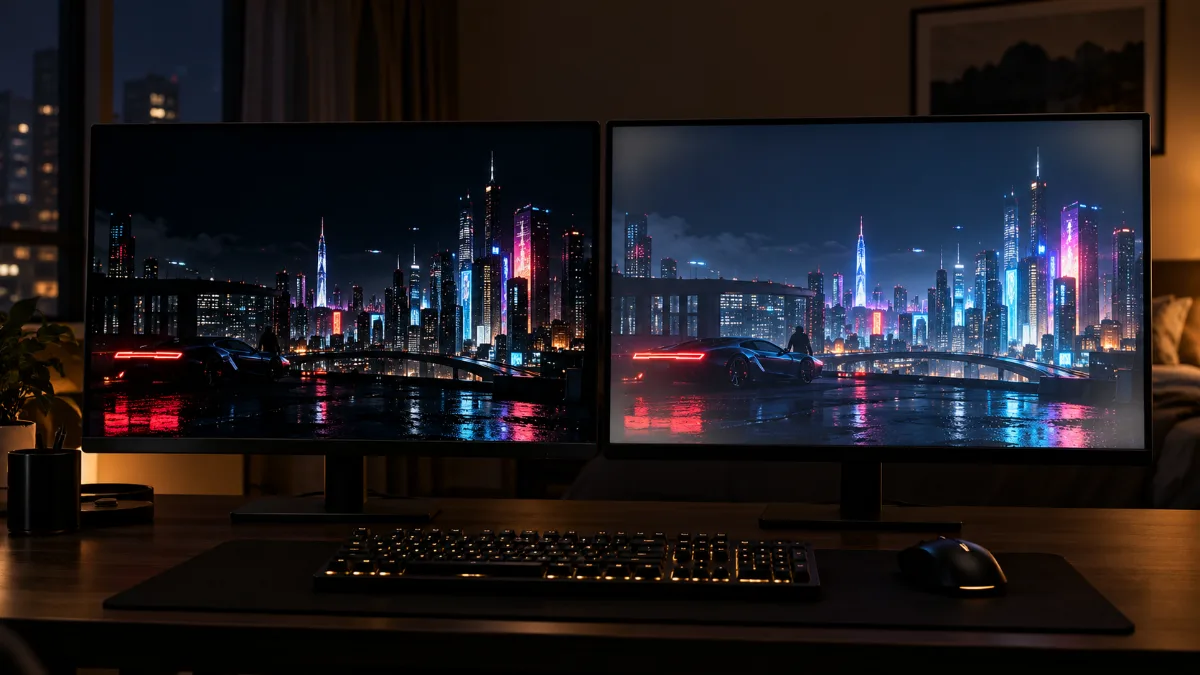
What is an IPS panel?
An IPS panel (In-Plane Switching) is an LCD panel where the liquid crystals rotate parallel to the screen surface. Result: the light passes through the panel evenly, and the colours stay true even when you view the screen from an angle.
- Highlights: precise, stable colours; very wide viewing angles; good responsiveness on recent Fast IPS models.
- Downsides: limited contrast (around 1,000:1 on a typical IPS), blacks that drift towards grey in complete darkness, and IPS glow, a visible luminous halo in the corners on a dark background.
IPS glow often surprises you right out of the box. It’s normal behaviour for the technology, not a manufacturing defect. It’s mainly visible from an angle, with a black screen, in a dark room. In daylight or with a lamp behind the screen, it almost disappears.
What is a VA panel?
A VA panel (Vertical Alignment) is an LCD panel where the liquid crystals sit vertically at rest and block light very effectively. That’s what gives it its main strength: deep blacks and a contrast ratio that is often two to four times higher than on an IPS.
- Highlights: high contrast (often 2,500:1 to 4,000:1), deep blacks, excellent performance in a dark room, lots of curved and ultra-wide models.
- Downsides: slower transitions from black, which create black smearing (a dark trail behind fast-moving objects), and an image that loses a bit of colour and contrast when you move away from the centre axis.
Black smearing depends a lot on the model. Panels sold as Fast VA have it noticeably reduced, but in a dark horror-game corridor or on a night map, an experienced eye can still spot it.
VA vs IPS: the comparison table
| Criteria | IPS panel | VA panel |
|---|---|---|
| Typical contrast | Around 1,000:1 (up to 2,000:1 on IPS Black panels) | 2,500:1 to 4,000:1 on most models |
| Blacks in a dark room | Greyish, possible IPS glow | Deep |
| Colour accuracy | Excellent | Good |
| Viewing angles | 178°, very stable colours when viewed from an angle | 178° announced, contrast and colour shift when viewed from an angle |
| Response time | Very good on Fast IPS | Good on Fast VA; black smearing possible in dark scenes |
| Competitive gaming (FPS) | Ideal | OK, less sharp in dark scenes |
| Single-player, movies, dark room | Good | Ideal |
| Photo retouching, video editing | Ideal | OK |
Contrast and viewing angle values: Display Ninja, IPS vs TN vs VA guide (December 2025). Each model remains different: always check the stated contrast in the datasheet.
In video: TN, IPS, VA, OLED and Mini-LED explained
To see the technology differences with diagrams, this French video goes through the panel types, from TN to OLED.
Which panel should you choose for gaming?
For FPS and competitive play: Fast IPS
In a game where every frame counts, you want a clean image in motion, without smearing in dark areas. A Fast IPS in 1440p between 180 and 240 Hz is today the most balanced choice: enough detail to spot a target in the distance, and enough smoothness to follow a flick.
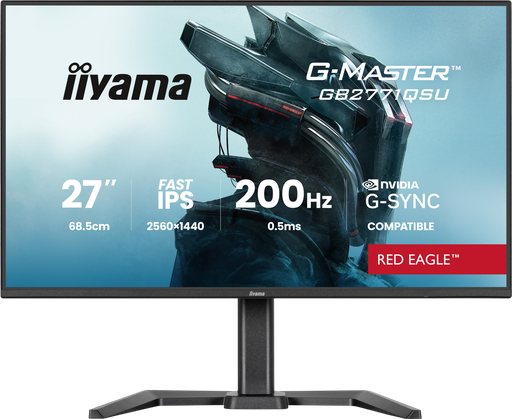
iiyama G-Master Red Eagle 27", WQHD, Fast IPS, 200 Hz
A 27-inch Fast IPS in 1440p and 200 Hz: the format that fits most of today’s gaming setups, with the IPS colours you can trust.
For single-player gaming and movies in the dark: VA
Cyberpunk 2077 at night, Alan Wake 2, a late-evening film: that’s where the voice acting really shines. The dark areas stay truly black, the neon pops, and the atmosphere feels closer to a good television set.
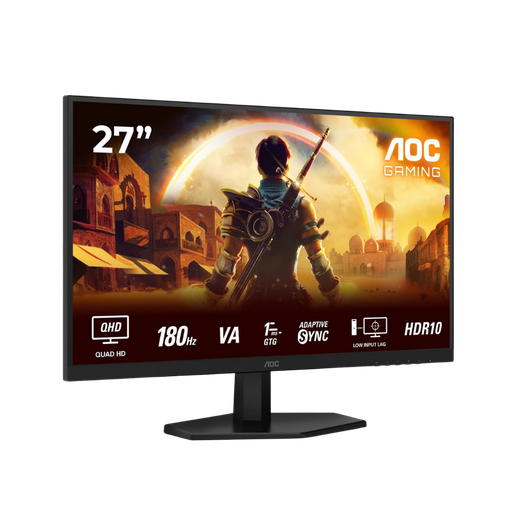
AOC 27", QHD, Fast VA, 180 Hz
A 27-inch Fast VA in 1440p and 180 Hz, so you can enjoy VA contrast with response times tuned for gaming.
To avoid choosing: OLED
OLED is neither an IPS nor a VA: every pixel produces its own light and can switch fully off. You get perfect blacks, near-instant response times, and very rich colours. The trade-offs: a higher price, lower average brightness over large white areas, and a risk of image retention if fixed elements stay on screen for hours at a time.
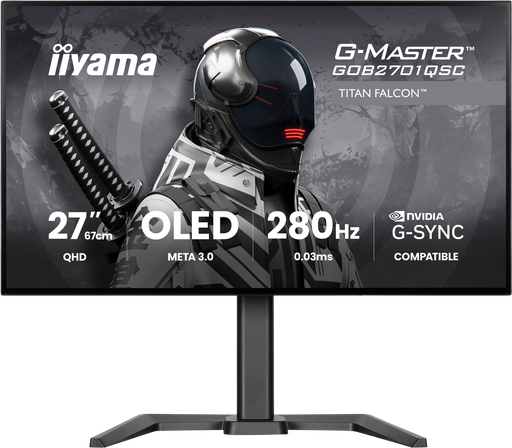
iiyama G-Master Titan Falcon 27", QHD, Tandem OLED, 280 Hz
A 27-inch OLED panel in 1440p and 280 Hz: perfect blacks and top-tier responsiveness, for players who want the best of both worlds.
And does the TN panel still have a purpose?
The TN panel (Twisted Nematic) has long reigned supreme in e-sports thanks to its fast response. Today, Fast IPS displays perform just as well in speed while delivering much better colours and viewing angles (170° horizontal and 160° vertical on TN, vs 178° on IPS). Unless you have a very specific need, we no longer recommend it.
Before you buy: 4 things to check
- Size and resolution: 24 inches in 1080p, 27 inches in 1440p, 32 inches and up in 4K. A 27-inch in 1080p, for example, quickly looks pixelated up close.
- Refresh rate: aim for a refresh rate that your graphics card can actually reach in your games.
- Real contrast: read the technical specifications rather than relying on the panel name alone.
- Connections: DisplayPort to make the most of high refresh rates on a PC.
All our models are in the category gaming screens. And to choose the PC that will run your games at the right frequency, our guide best gaming PC 2026 based on your budget helps you find the right setup.
FAQ VA panels and IPS panels
What is an IPS panel?
An IPS panel is an LCD panel whose liquid crystals align parallel to the screen. It delivers accurate colours and wide viewing angles, with a contrast ratio of around 1,000:1.
What is a VA panel?
A VA panel is an LCD panel whose liquid crystals are aligned vertically at rest. It blocks light better and offers deep blacks, with a contrast ratio often between 2,500:1 and 4,000:1.
VA or IPS panel for gaming?
Fast IPS for competitive gaming and bright scenes, VA for single-player games and films in a dark room. Both are ideal for gaming as long as the refresh rate and responsiveness keep up.
Is a VA panel bad for FPS?
No, but it can leave a dark trail (black smearing) behind fast-moving objects in dark scenes. Recent Fast VA panels limit this drawback. For a demanding competitive player, a Fast IPS is still safer.
Is IPS glow a defect?
No. It’s a visible halo in the corners on a black background, inherent to IPS technology. It’s most noticeable in complete darkness and from an angle, and it fades with ambient lighting.
Which panel for watching films?
VA, thanks to its deep blacks, or OLED if the budget allows. IPS is still fine, but it shows more greyish blacks in a dark room.
Which panel for photo retouching and video editing?
IPS, for colour accuracy and stability from all viewing angles.
