 Your PC in instalments (up to 12x)
By the FlowUP team, PC gaming assembler in Genappe (Belgium) · Updated 28 September 2026
In brief: the Radeon RX 7900 GRE is an AMD RDNA 3-generation graphics card with 16GB of GDDR6. Released in China in July 2023, it launched worldwide on 27 February 2024 for $549. In classic gaming, it matches the RTX 4070 Super at 1440p and often comes out ahead at 4K. In ray tracing, however, NVIDIA still has a clear edge, and the GRE draws about 40 to 50 W more. In 2026 it’s still a good 1440p card, especially second-hand, but the RX 9070 performs better for the same launch price.
RX 7900 GRE specification sheet
GRE stands for “Golden Rabbit Edition”, a nod to the Year of the Rabbit on the Chinese calendar: the card was first reserved for the Chinese market before its global release.
Under the hood, you’ll find the Navi 31 chip, the same one as in the RX 7900 XT and XTX, but with fewer active compute units and slower memory. The result is that it slots between the RX 7800 XT and the RX 7900 XT in AMD’s range.
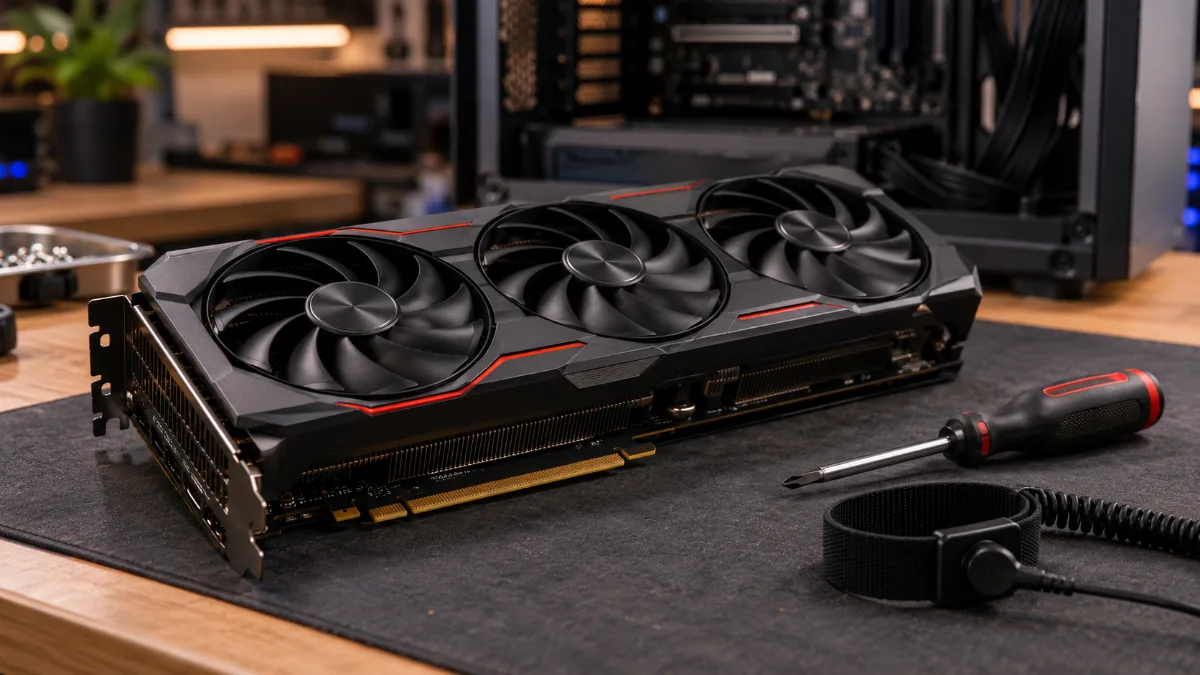
| Architecture | RDNA 3 (Navi 31 chip) |
|---|---|
| Compute units | 80 (5,120 stream processors) |
| Ray tracing accelerators | 80 |
| Game / boost clock | 1,880 MHz / up to 2,245 MHz |
| Memory | 16GB GDDR6, 256-bit bus, 18 Gbit/s |
| Bandwidth | 576 GB/s |
| Infinity Cache | 64MB |
| Typical power draw (TBP) | 260 W |
| Power supply | 2x PCIe 8-pin connectors |
| Outputs | DisplayPort 2.1, HDMI 2.1 |
| Release | 27 July 2023 (China), 27 February 2024 worldwide for $549 |
Source: official AMD spec sheet, consulted on 28 September 2026. Global launch price: $549 (excluding tax, US market).
RX 7900 GRE vs RTX 4070 Super: which is faster?
Short answer: without ray tracing in 1440p it’s a draw, with a slight AMD edge at 4K. As soon as you push ray tracing, the RTX 4070 Super pulls ahead, sometimes by a lot.
| Feature | RX 7900 GRE | RTX 4070 Super |
|---|---|---|
| Video memory | 16GB GDDR6 | 12GB GDDR6X |
| Memory bus | 256-bit | 192-bit |
| Bandwidth | 576 GB/s | 504 GB/s |
| Announced power draw | 260 W | 220 W |
| Launch price | $549 (February 2024) | $599 (January 2024) |
| Upscaling | FSR 3.1 (no official FSR 4) | DLSS 4 Super Resolution and Frame Generation (Multi Frame Generation reserved for RTX 50) |
In rasterisation (classic gaming)
In 10 tested games at 1440p by TheFPSReview (May 2024), the GRE wins 5, the 4070 Super wins 4, and one game ends in a tie, with differences ranging from 2% to 20%. By GamersNexus (March 2024), the GRE beats the 4070 Super by 10% in Resident Evil 4 at 1440p, and by 15.6% at 4K. That’s where its 16GB and 256-bit bus make the difference.
In ray tracing
Scene change. TheFPSReview gives the advantage to the RTX 4070 Super in the 6 games tested with ray tracing, up to 63% in Alan Wake 2. GamersNexus measures the same 63% gap in Cyberpunk 2077 with Ultra ray tracing. If your favourite games rely on ray-traced lighting, the question is quickly settled.
In power consumption
GamersNexus records around 270 W under full load for the GRE, versus 222 W for the 4070 Super. Nothing alarming in a well-ventilated case, but it does translate into a bit more heat and noise. Plan for a quality power supply: our power supply choosing guide helps you size it.
Our take: for competitive shooters and games without ray tracing, the GRE’s 16GB is a safer bet than 12GB (we cover this in our article 8, 12 or 16GB of VRAM). If Cyberpunk 2077, Alan Wake 2 or Indiana Jones in ray tracing are your games, go with NVIDIA.
Video review of the RX 7900 GRE
Test of the Radeon RX 7900 GRE by the FNK Hardware channel (2024, in French).
What’s the RX 7900 GRE worth in 2026?
Short answer: it’s still a good card for playing in 1440p, with one real limitation: it doesn’t officially benefit from FSR 4, AMD’s AI-based upscaling, reserved for Radeon RX 9000.
- What still holds up: its 16GB of VRAM, comfortable for the high textures of recent games, and its 1440p rasterisation performance.
- What has aged: ray tracing, which falls behind the RTX 40 and 50 series as well as the RX 9000 series, and FSR 3.1 upscaling, which is less sharp than FSR 4 or DLSS 4.
- What’s changed: the RX 9070 launched in March 2025 at the same launch price: $549. At the time, AMD said the RX 9070 was 21% faster in 4K, and the RX 9070 XT was 42% faster, across some thirty games (manufacturer figures reported by PC Gamer, February 2025).
Buying it second-hand? Ask for the receipt for the remaining warranty, fire up a demanding game for half an hour, and monitor hotspot temperature with a tool like HWiNFO. A rattling fan or a hotspot that rises abnormally high, that’s a no. And if you’re torn between multiple cards, our guide which GPU to buy in 2026 covers the current market situation.
What should you replace it with? Our equivalent PCs
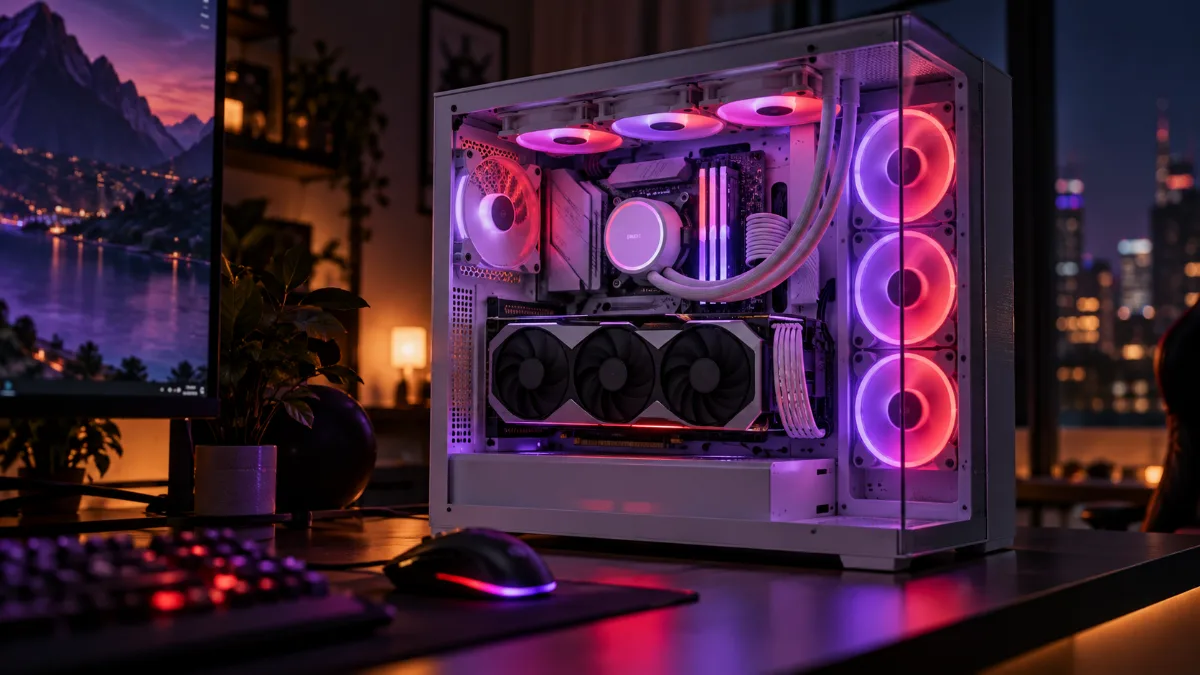
In our current line-up, the RX 7900 GRE’s successor is called RX 9070 and RX 9070 XT on the AMD side, and RTX 5070 on the NVIDIA side. All of them keep the 1440p target at high refresh rates, with better ray tracing and next-generation upscaling.
To compare the two Radeon cards, read our guide RX 9070 and RX 9070 XT. On the NVIDIA side, it’s all in our review of the RTX 5070.
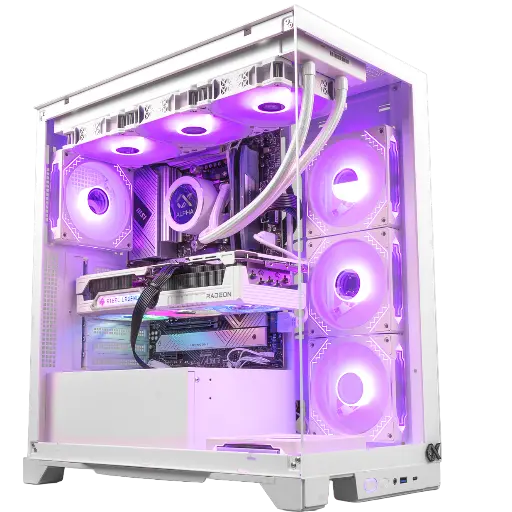
Sakura PC: Radeon RX 9070 16 GB
Ryzen 7 8700F, 16 GB DDR5, 1 TB M.2 SSD and 360 mm water cooling in a white build designed for 1440p. The GRE’s direct successor, but more power-efficient.
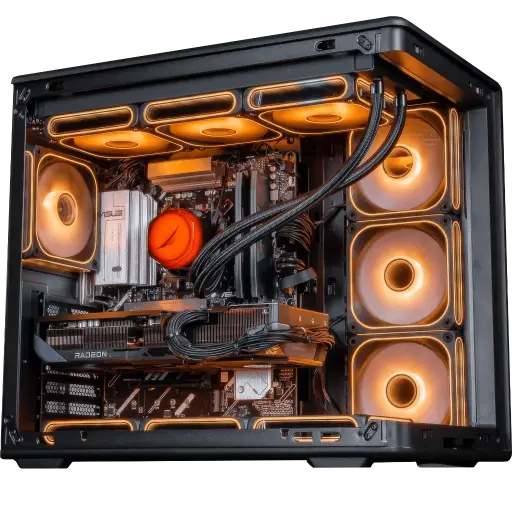
Apex V2 PC: Radeon RX 9070 XT 16 GB
Ryzen 7 7800X3D and 32 GB DDR5: the choice if you want to hit 1440p on Ultra and try for 4K.
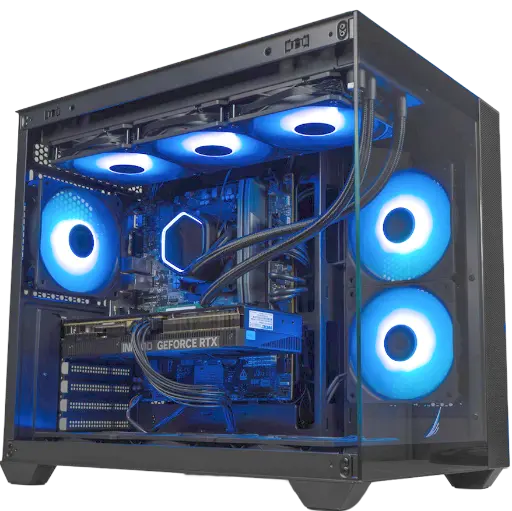
Umbra PC: GeForce RTX 5070 12 GB
Ryzen 5 7500F and RTX 5070: NVIDIA’s option to enjoy ray tracing and DLSS 4 at 1440p.
Our verdict
The RX 7900 GRE was one of the best deals of 2024: the performance of a high-end card in rasterisation for the price of a mid-range model, with 16 GB of VRAM. In 2026, it’s still a good buy second-hand for 1440p without ray tracing, as long as you pay significantly less than a brand-new RX 9070. New, it no longer really makes sense versus the RX 9070, faster, more power-conscious, and compatible with FSR 4. To get a feel for the range, our guide to choosing a graphics card summarises the performance tiers.
Frequently asked questions about the RX 7900 GRE
What does GRE mean on the RX 7900 GRE?
GRE stands for “Golden Rabbit Edition”, in reference to the Year of the Rabbit on the Chinese calendar. The card was first sold in China in 2023 before its global release in February 2024.
Is the RX 7900 GRE made for 4K?
It runs many games in 4K with adjusted settings and FSR, and that’s where it most often beats the RTX 4070 Super. But it’s primarily a 1440p card: in 4K, the heaviest recent games require compromises.
What power supply for an RX 7900 GRE?
AMD announces a typical power draw of 260 W and two 8-pin connectors. With a mid-range processor, a good 750 W power supply certified 80 Plus Gold leaves plenty of headroom. Details in our power supply guide.
RX 7900 GRE or RX 7800 XT?
The GRE has 80 compute units versus 60 for the RX 7800 XT, and is generally a little faster. The gap varies by game, because the 7800 XT has faster memory. At a similar price, the GRE keeps the advantage.
RX 7900 GRE or RX 9070?
The RX 9070, without a doubt, if you’re buying new: AMD claims it’s 21% faster in 4K, it uses less power (220 W claimed) and it benefits from FSR 4 and significantly improved ray tracing.
Is the RX 7900 GRE compatible with FSR 4?
Not officially as of the update date of this article: AMD reserves FSR 4 for Radeon RX 9000 cards. The GRE uses FSR 3.1 and the FSR 3 frame generation.
