By the FlowUP team, PC gaming PC assembler in Genappe (Belgium) · Updated 28 September 2026
In 2026, 8GB of VRAM is still enough for playing at 1080p with the right settings, 12GB is the right balance for 1440p, and 16GB leaves you some headroom for the heaviest games, ultra textures and 4K. Debates like “8GB is dead” or “16GB or nothing” miss what really matters: the right amount depends on your resolution, your games and the graphics card’s own power and performance.
In brief
- VRAM is the graphics card’s memory: it stores textures, effects and image data.
- 8GB: 1080p, tuned settings, tight budget.
- 12GB: the best balance for 1440p.
- 16GB: headroom for heavy games, higher textures and 4K.
- More VRAM doesn’t mean more FPS: the card’s power matters just as much.
What exactly is VRAM?
VRAM is the video memory built into the graphics card. It stores textures, geometry data, visual effects, calculations related to ray tracing and images currently being prepared. The higher the resolution and texture quality, the fuller it gets.
When the VRAM is full, the card has to fetch data from the PC’s RAM, which is much slower: that’s when stuttering shows up, blurry textures that load late and sudden FPS drops. On the other hand, as long as the VRAM isn’t saturated, adding more doesn’t make the game run faster. For the other criteria, read our guide to choose a graphics card in 2026.
The signs of a lack of VRAM and the solutions—including a test of the RTX 5060 Ti 8 GB versus 16 GB—are in our article VRAM shortage: symptoms and solutions.
How much VRAM for your resolution: the table
| Resolution | Minimum VRAM | Recommended VRAM in 2026 | Examples of cards |
|---|---|---|---|
| 1080p (Full HD) | 8GB | 8 to 12GB | RTX 5060, RX 9060 8GB |
| 1440p (QHD) | 12GB | 12 to 16GB | RTX 5070, RX 9060 XT 16GB, RTX 5060 Ti 16GB |
| 4K (UHD) | 16GB | 16GB and up | RX 9070 XT, RTX 5070 Ti, RTX 5080 |
FlowUP guidelines, consistent with the official configurations of the recent games mentioned further down.
Why the question comes up more in 2026
Game requirements are rising. The official configurations make it clear: Indiana Jones and the Great Circle requires at least 8GB of VRAM, 12GB in its recommended setup for native 1440p, and 16GB for native 4K on NVIDIA. Microsoft Flight Simulator 2024 lists 4GB minimum, 8GB recommended and 12GB in its “Ideal” tier.
Current graphics cards follow the trend: NVIDIA sells the RTX 5070 with 12GB of GDDR7, AMD offers the RX 9060 with 8GB, the RX 9060 XT with 16GB and puts 16GB on its RX 9070 and 9070 XT. So all three tiers still exist, each with its own logic. That’s also why we often recommend a 16GB card for 1440p, as in our RX 9070 vs RX 9070 XT comparison. To make the right choice despite rising prices, read also which GPU to buy in 2026.
8GB of VRAM: is it still enough in 2026?
Yes, especially at 1080p. Indiana Jones and the Great Circle requires at least 8GB for native 1080p on low settings at 60 frames per second, and Microsoft Flight Simulator 2024 recommends 8GB in its “Recommended” tier.
On a well-thought-out setup, with textures adjusted accordingly, 8GB are still defensible. They become limiting much sooner when you increase resolution, texture quality or ray tracing. This is the profile of our €1,000 gaming PC configuration.
12GB of VRAM: the best balance in 2026?
For many players, yes. 12GB offers real headroom over 8GB without having to move up to the most expensive cards. Indiana Jones and the Great Circle asks for 12GB in its recommended native 1440p configuration, and Microsoft Flight Simulator 2024 goes up to 12GB in its “Ideal” tier.
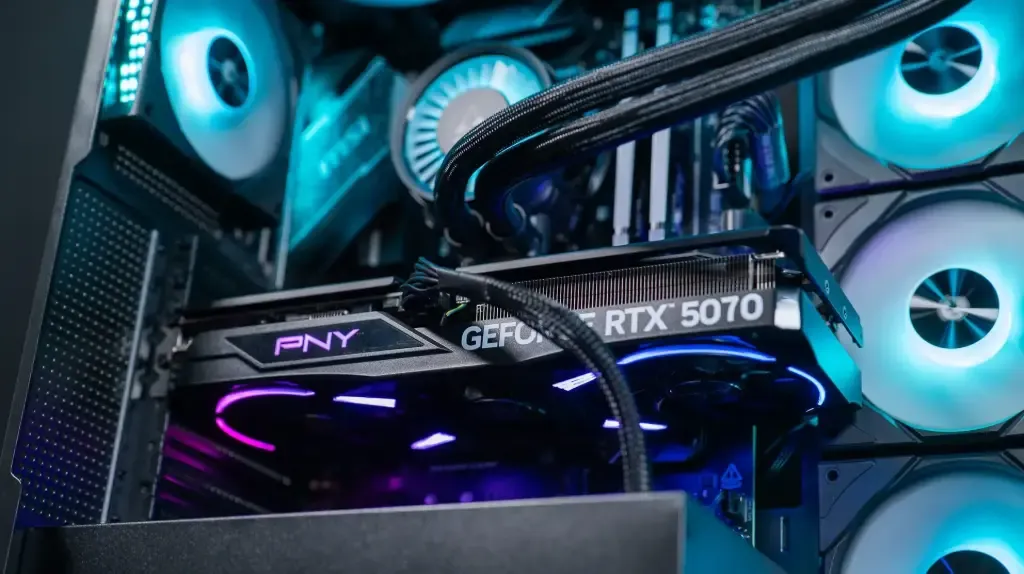
That’s exactly the profile of the RTX 5070: in our review of the RTX 5070, we’ve gathered the tests published since its release, including the games where its 12GB start to feel tight. For a complete build, see our ideal 1440p configuration.
16GB of VRAM: when is it really worth it?
16GB isn’t a minimum for everyone, but it brings peace of mind if you’re aiming for:
- the most demanding AAA big titles;
- textures at maximum quality;
- 1440p for several years without having to think about it;
- 4K or heavy ray tracing.
Future big hits will go in that direction: see our article on the PC setup you’ll need for GTA 6.
8GB, 12GB or 16GB: what really changes in games?
More VRAM doesn’t automatically mean more FPS. A card that’s too underpowered won’t get faster just because it has more memory: a 16 GB RX 9060 XT is still a mid-range card, slower than a 12 GB RTX 5070 in most games. VRAM mainly prevents stuttering and degraded textures when a game demands more. So you need to think in terms of overall balance: card power, resolution, and the games you play. Our guide of the best gaming PC for your budget goes in this direction.
How much VRAM do you really need to game, in video (Le Lab Tech channel).
So, how much VRAM do you really need in 2026?
8 GB if…
you mostly play at 1080p, your budget is tight, and you’re willing to tweak a few settings.
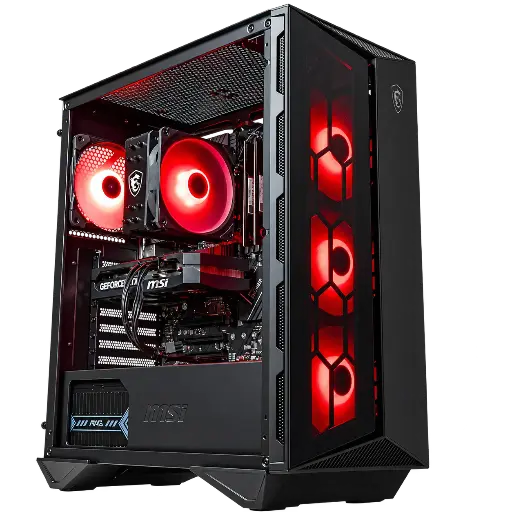
PC Banger GeForce RTX 5060
RTX 5060 (8 GB) and Intel Core i5-12400F: a sensible setup for 1080p.
12 GB if…
you’re targeting 1440p and want a good balance between budget and comfort.
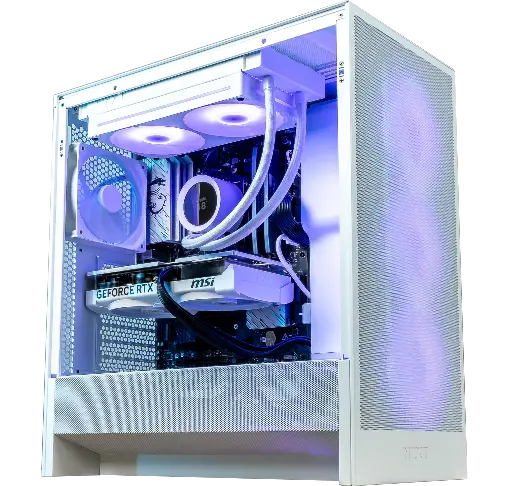
PC Novara GeForce RTX 5070
RTX 5070 12 GB, Ryzen 5 7500X3D, 16 GB DDR5 RAM and a 1 TB M.2 SSD, for 1440p.
16 GB if…
you want peace of mind over the long term, maximum textures, or 4K.
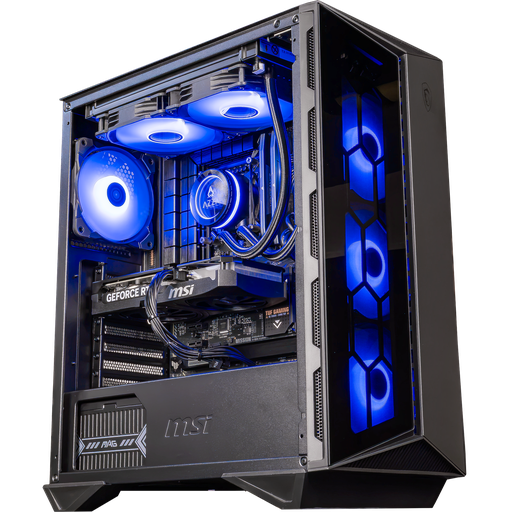
PC Swift GeForce RTX 5060 Ti 16 GB
16 GB of VRAM at a sensible price for Full HD at Ultra and 1440p.
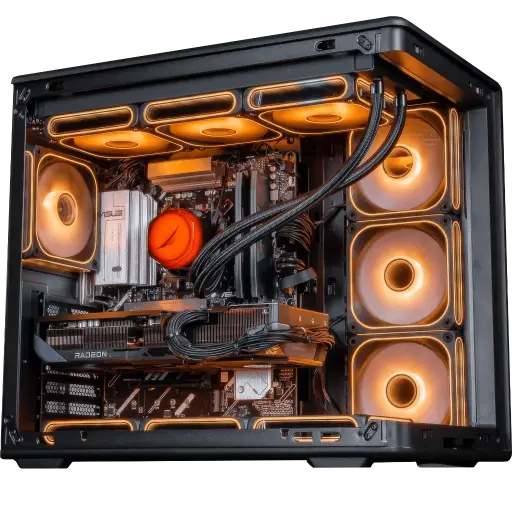
PC Apex V2 Radeon RX 9070 XT 16 GB
The RX 9070 XT and its 16 GB for 1440p on Ultra and 4K.
Also to read: Expedition 33 PC: system requirements and which PC to enjoy it on
VRAM FAQ 2026
Are 8 GB of VRAM still enough in 2026?
Yes, in many cases at 1080p. Indiana Jones and the Great Circle requires a minimum of 8 GB at native 1080p, and Microsoft Flight Simulator 2024 recommends 8 GB.
Is 12 GB of VRAM enough for 1440p?
Very often, yes: that’s the amount recommended by Indiana Jones and the Great Circle for native 1440p, and it matches the RTX 5070’s.
Is 16 GB of VRAM essential?
No, but it becomes very interesting for 4K, higher textures, and keeping a card for several years.
Does more VRAM mean more FPS?
Not automatically. VRAM prevents stuttering when it runs short, but it’s the card’s power that determines the number of frames per second.
What’s the best choice for a balanced gaming PC?
For most players: 12 to 16 GB, the best compromise between budget, comfort, and longevity.
Sources: official system requirements for Indiana Jones and the Great Circle (Bethesda) and Microsoft Flight Simulator 2024; NVIDIA and AMD specifications.