 Your PC in instalments (up to 12x)
By the FlowUP team, gaming PC builder in Genappe (Belgium) · Updated 29 September 2026
In short: to get started with gaming on PC in 2026 under good conditions, aim for a setup that can run the latest games in 1080p: a recent 6-core CPU (Ryzen 5 7500F, Core i5-12400F or equivalent), a RTX 5060 or RX 9060 XT-type graphics card (ideally with 16 GB of video memory), 16 GB of RAM in dual-channel, a 1 TB NVMe SSD and a branded power supply. With a 1080p monitor at 144 Hz or higher, that’s the baseline for high-FPS e-sports and AAA games on high settings.
Start on PC instead of console?
That’s the question most beginners ask. A console often costs less to buy, that’s true. But over time, the maths changes: on PlayStation and on Xbox, playing online requires a paid subscription, whereas on PC online gaming is free in the vast majority of games. Discounts are also very frequent on PC storefronts like Steam, and many major e-sports titles are free.
Above all, a PC is upgradeable: you swap the graphics card or add memory instead of buying everything again. And it’s also useful for work, editing videos, or streaming.
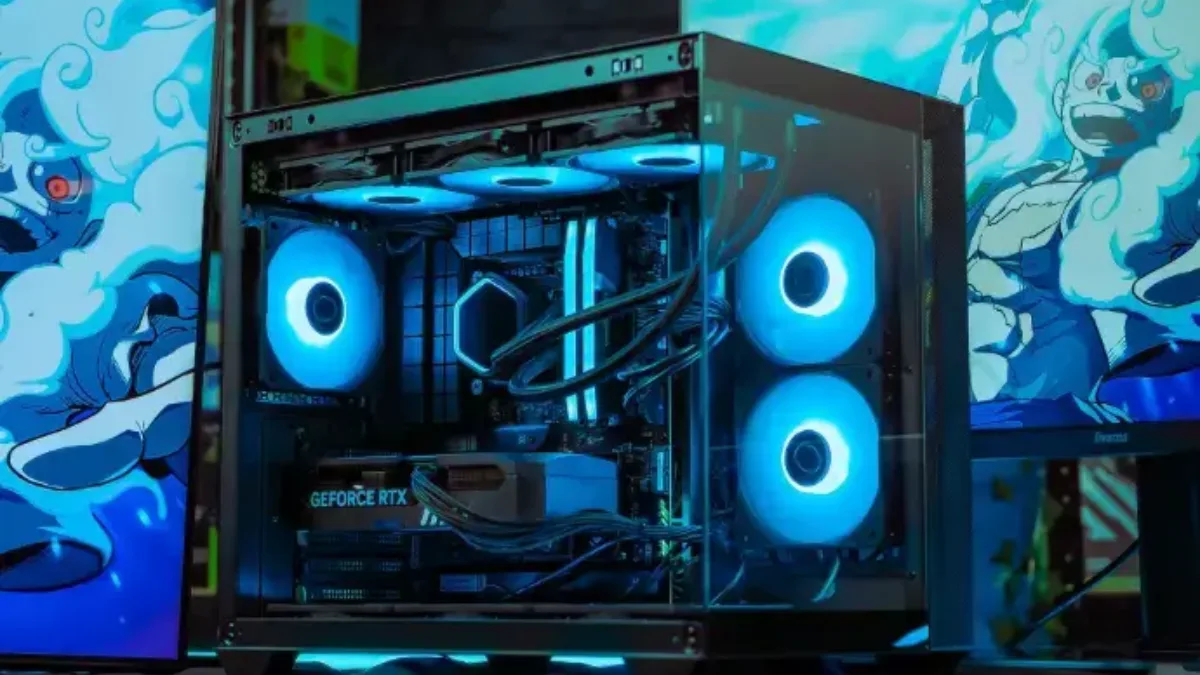
A well-chosen first gaming PC can last for years, upgrading component by component.
Recommended setup to start in 2026
| Component | Our advice | Why |
|---|---|---|
| Processor | Recent 6 cores: Ryzen 5 7500F, Core i5-12400F or equivalent | Enough for all current games in 1080p |
| Graphics card | RTX 5060 or RX 9060 XT, ideally 16 GB | It’s the one that delivers the FPS; 8 GB can feel tight in some recent games |
| RAM | 16 GB in two sticks (dual-channel) | 32 GB if you stream or keep lots of apps open |
| Storage | 1 TB NVMe SSD | Newer games often exceed 100 GB, and some require an SSD (see SSD or HDD) |
| Power supply | 550 to 650 W from a reputable brand, 80 PLUS certified | A part you should never overlook |
| Monitor | 1080p, 144 Hz or higher | Without it, extra FPS aren’t noticeable |
What this baseline lets you do: e-sports games (Valorant, Fortnite in Performance mode, Counter-Strike 2) at very high FPS, and recent AAA games at high settings in 1080p, with the help of DLSS or FSR. To go further, our guide best gaming PC for your budget breaks down the higher tiers in detail.
The three traps for beginners
- Going all-in on the graphics card. A big card with an unbranded power supply and 8 GB of RAM is an unstable PC. Balance matters more than the star component.
- Forgetting the monitor. A PC capable of 200 FPS plugged into a 60 Hz screen will only display 60. Set aside a budget for the monitor, as well as the keyboard, mouse and headset.
- Buying too little. A graphics card with 8 GB or 8 GB of RAM can be enough today and still limit you as soon as next year. It’s better to go one step up on memory than on the processor.
For the full purchasing approach (budget, built or to-be-assembled PC, checks before paying, online rights), follow our buying guide for your first gaming PC.
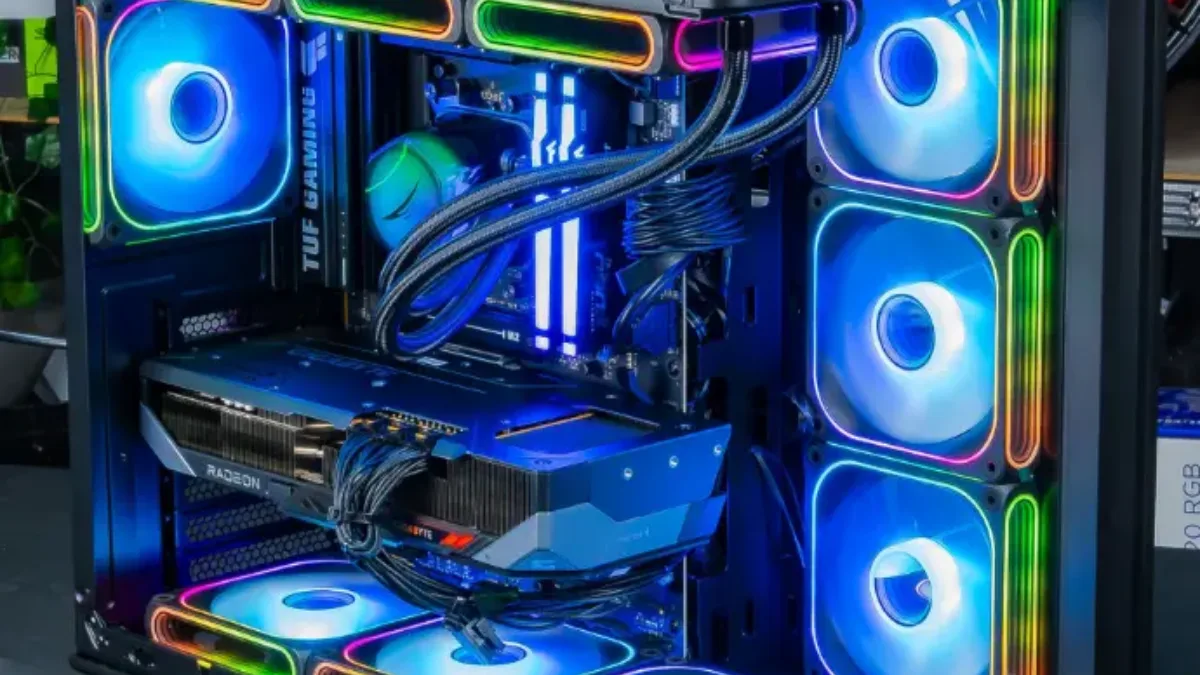
The balance between components matters more than the most expensive part.
Build your PC or buy it pre-built?
Building your PC yourself lets you choose every part and learn how a machine works. But for your first PC, it’s also the moment when you have the fewest reference points: compatibility, assembly, installing Windows and drivers, and a single warranty per part if something goes wrong. A PC built and tested before shipping avoids these pitfalls, with one single warranty for the whole system. We compare the two options in build your PC or buy a pre-built PC.
To see one of our PCs in action, here’s the gaming test of our Rift PC (Radeon RX 9060 XT) by Mathis and Gauthier:
Mathis and Gauthier, test of the FlowUP Rift PC, September 2026.
Our PCs to get started
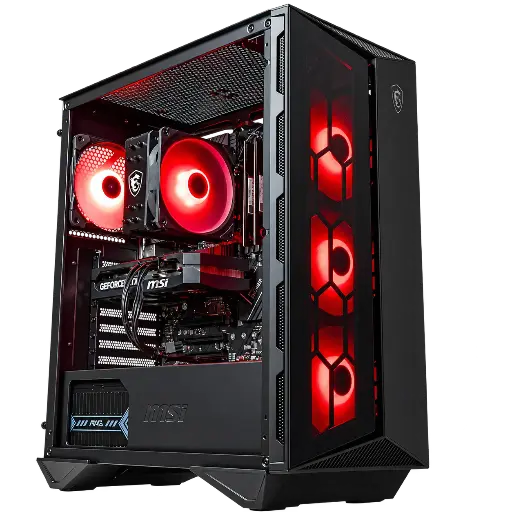
Banger PC: the starting point
Core i5-12400F and RTX 5060: the basis for high-FPS e-sports and recent games in 1080p.
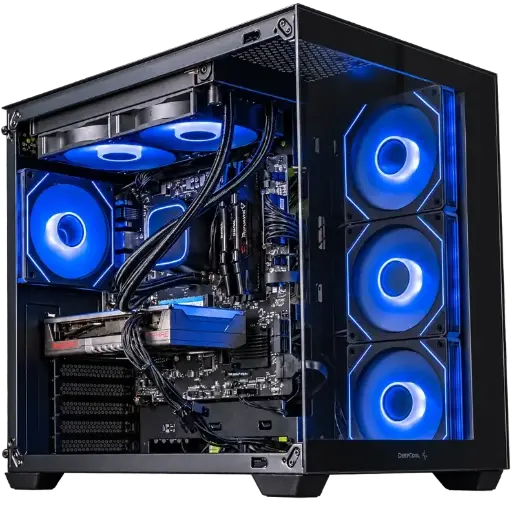
Spike PC: 8 cores and RX 9060 XT
Ryzen 7 5700X and RX 9060 XT in 8 or 16 GB: a balanced setup to start at 1080p on high settings.
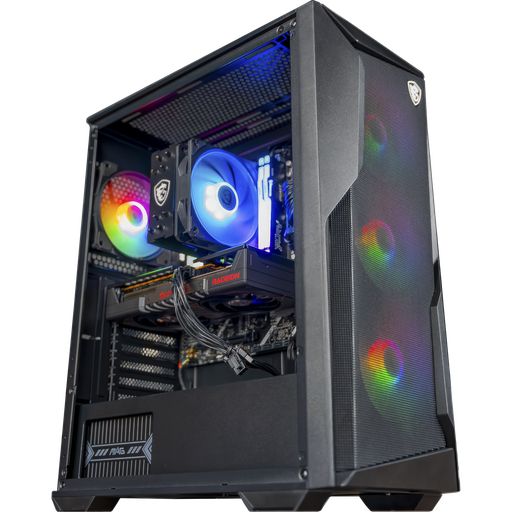
Rift PC: 16 GB of video memory
Ryzen 5 7500F, RX 9060 XT 16 GB, DDR5 and a 1 TB SSD: a base that will last.
FAQ: gaming PC for beginners
What configuration for a beginner gaming PC?
A recent 6-core processor, an RTX 5060 or RX 9060 XT, 16 GB of dual-channel RAM, a 1 TB NVMe SSD, and a branded power supply, with a 1080p 144 Hz screen.
Is 8 GB of video memory enough to get started?
For esports and a lot of games at 1080p, yes. For the newest, most demanding games, 16 GB provides more breathing room: that’s what we recommend if the budget allows.
16 or 32 GB of RAM to get started?
16 GB is enough to play. 32 GB becomes useful if you stream, record your matches, or keep lots of applications open.
Is it better to start on a PC or a console?
The console costs less upfront, the PC is often cheaper over time (free online play, frequent promotions) and it can be upgraded. It’s also good for things other than gaming.
Can you upgrade an entry-level gaming PC?
Yes: the graphics card, memory and storage are easy to replace. A newer platform (AM5 on AMD, for example) even lets you change the processor later.
