
By the FlowUP team, gaming PC builder in Genappe (Belgium) · Updated 30 September 2026
In short: no new graphics-card generation is announced for 2026, and memory is pushing prices up. Waiting won’t guarantee anything. Our picks: RTX 5060 Ti 16GB or RX 9060 XT 16GB for 1080p, RTX 5070 or RX 9070 XT for 1440p, RTX 5070 Ti or RTX 5080 for high-refresh 1440p and 4K, and the RTX 5090 for uncompromising 4K.
Why graphics-card prices are rising in 2026
The culprit is memory. Since the end of 2025, the big manufacturers (Samsung, SK hynix, Micron) have been dedicating an increasing share of their factories to HBM memory for AI accelerators. PC memory, meaning RAM as well as the GDDR on graphics cards, is becoming scarcer and more expensive, so that feeds directly into graphics-card prices.
Practical consequence: waiting for a general price drop is a risky bet. The calendar details and the pitfalls are in our article what’s the best time to buy a gaming PC.
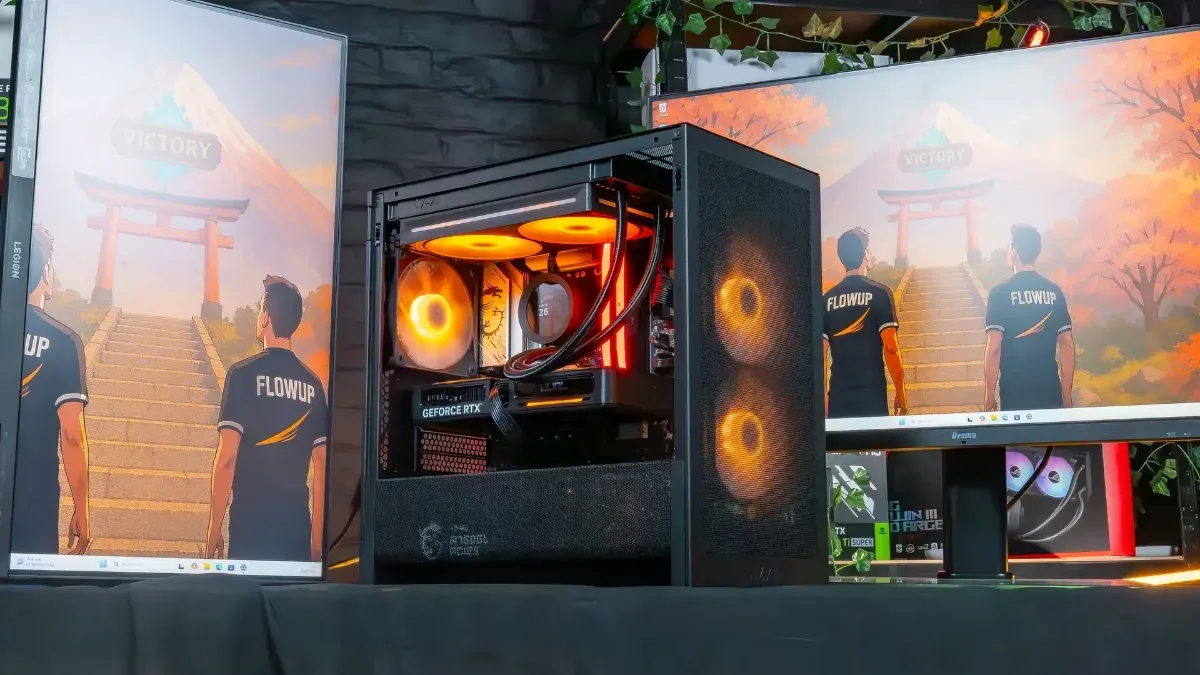
One of our demo PCs: in 2026, the graphics card is still the component that weighs the most on the price.
Priority access to FlowUP
stocks + the best prices first
Which graphics card to buy in 2026: our selection
| Use | NVIDIA choice | AMD choice | Our take |
|---|---|---|---|
| 1080p (and 1440p with adjusted settings) | NVIDIA GeForce RTX 5060 Ti 16 GB | RX 9060 XT 16GB | Get the 16GB versions |
| 1440p | RTX 5070 | RX 9070 XT | The RX 9070 XT is faster; the RTX 5070 has DLSS 4 |
| High-refresh 1440p and 4K | RTX 5070 Ti or RTX 5080 | RX 9070 XT | At least 16GB of video memory |
| Uncompromising 4K | RTX 5090 | No equivalent | 32GB of video memory |
What these cards are worth in games, according to Tom’s Hardware’s ranking:
| Graphics card | 1080p ultra | 1440p ultra | 4K ultra |
|---|---|---|---|
| NVIDIA GeForce RTX 5060 Ti 16 GB | 105.2 FPS | 73.4 FPS | 40.2 FPS |
| RX 9060 XT 16GB | 98.3 FPS | 67.3 FPS | 35.2 FPS |
| RTX 5070 | 132.6 FPS | 96.4 FPS | 54.3 FPS |
| RX 9070 XT | 156.6 FPS | 116.5 FPS | 65.8 FPS |
| RTX 5070 Ti | 155.4 FPS | 116.8 FPS | 68.6 FPS |
| RTX 5080 | 166.9 FPS | 128.3 FPS | 77.4 FPS |
| RTX 5090 | 203.8 FPS | 167.3 FPS | 110.8 FPS |
Source: Tom’s Hardware, graphics-card ranking (average across 11 games in rasterisation, without upscaling), updated 24 June 2026.
Our builder’s view
The best performance-to-price deal in 2026 plays out at 1440p, between the RTX 5070 and the RX 9070 XT. The Radeon is faster in rasterisation, on par with an RTX 5070 Ti; the GeForce has DLSS 4 and better ray-tracing performance. Both are excellent choices.
At 1080p, steer clear of 8GB versions: the gap with 16GB models is small today, but it widens quickly in newer games. For the full method, see how to choose your graphics card in 2026 and our article on the lack of VRAM.
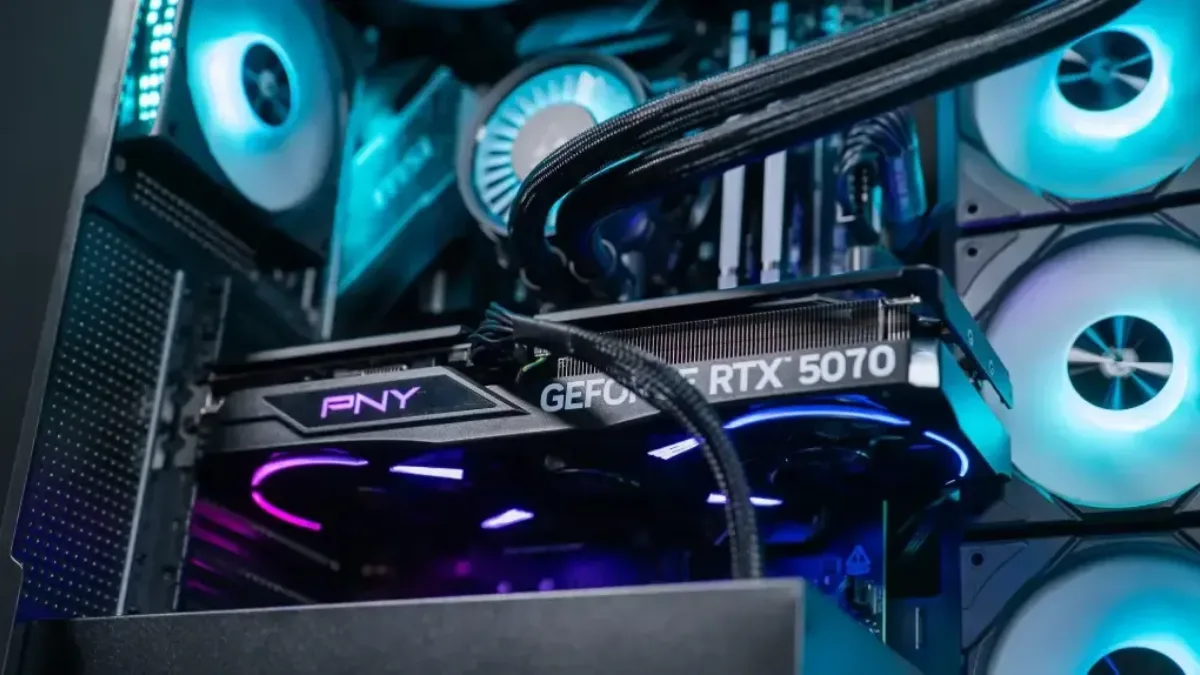
A RTX 5070 in one of our PCs: the right balance for 1440p in 2026.
Single card or full PC?
When prices move fast, a full PC has an advantage: you buy a coherent set, assembled and tested, with a single warranty, without having to chase every component. Our PCs go through OCCT stability tests (CPU, memory, graphics card, PSU) before shipping. Here are our models, by graphics card:
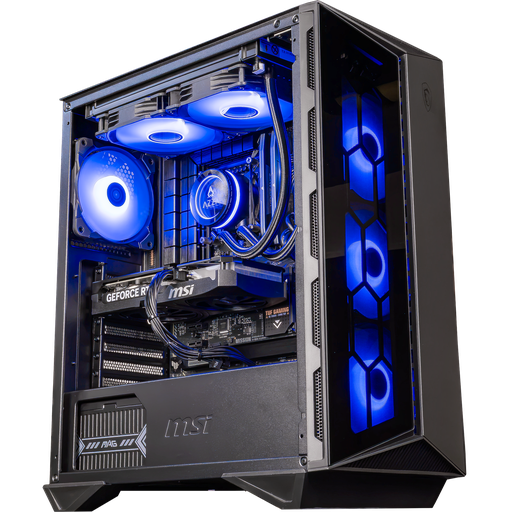
PC Swift: RTX 5060 Ti 16GB
Core i5 14400F, RTX 5060 Ti 16GB and DDR5: 1080p in ultra and 1440p with adjusted settings.
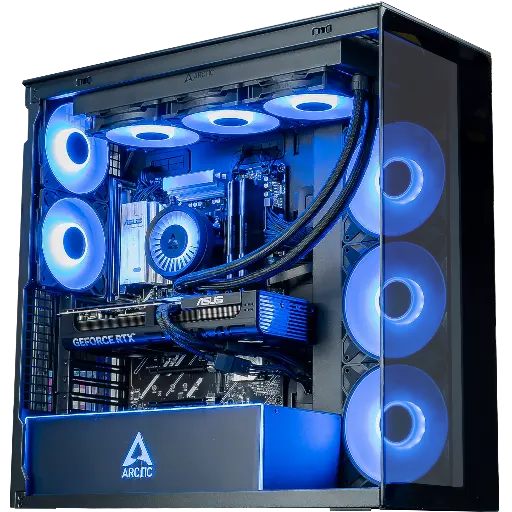
PC Cheetoh: RTX 5070
RTX 5070, Ryzen 7 X3D and DDR5: 1440p with high settings, with DLSS 4.
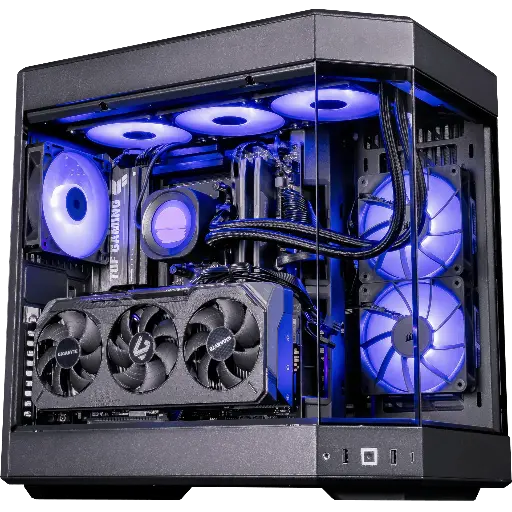
PC Shadow V2: RX 9070 XT
Radeon RX 9070 XT 16GB and Ryzen 7 9800X3D: high-refresh 1440p and 4K with upscaling.
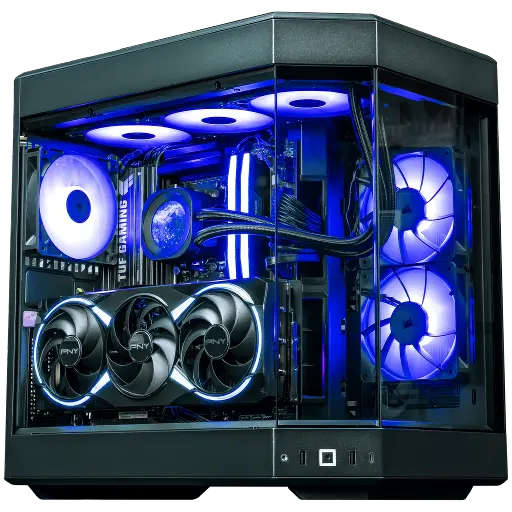
Once you’ve chosen the card, you just need to find the PC that includes it: gaming PC RTX 5070, 5060 or 5070 Ti: which card should you choose links each card to a use case and a FlowUP PC.
FAQ: which graphics card should you buy in 2026?
What is the best graphics card in 2026?
The RTX 5090 is the most powerful. For the performance-to-price ratio, the RX 9070 XT and RTX 5070 are the best picks for 1440p, and the RTX 5060 Ti 16GB and RX 9060 XT 16GB for 1080p.
Should you wait for a new graphics-card generation?
No new generation is announced for 2026, and memory prices are pushing upward instead. If you need a PC, waiting doesn’t make much sense.
Will graphics-card prices drop?
Nothing indicates that in the short term: memory manufacturers are announcing a shortage that lasts into 2027.
Is 8GB of video memory enough in 2026?
For 1080p and competitive games, yes. For newer games at 1440p and 4K, aim for 12 to 16GB.
NVIDIA or AMD in 2026?
AMD often delivers more rasterisation performance for the same price; NVIDIA keeps the edge in ray tracing and with DLSS 4. Choose based on your games.
Sources
- Tom's Hardware, graphics card ranking (June 2026)
