 Your PC in instalments (up to 12x)
By the FlowUP team, gaming PC builder in Genappe (Belgium) · Updated 2 October 2026
In brief: For playing in Full HD, an RTX 5060 is enough. For 1440p, the RTX 5070 is the balanced choice. For 1440p Ultra and 4K, go for the RTX 5070 Ti. Here are NVIDIA’s official specs, the FlowUP PCs that match each card, and three questions to help you decide.
Choosing a gaming PC is mainly choosing a graphics card. It’s the one that determines the resolution you’ll play at and the settings you’ll be able to enable. At FlowUP, three RTX 50-series cards repeatedly show up in our PCs: the RTX 5060, the RTX 5070 and the RTX 5070 Ti. Here’s how to tell them apart, with official figures to back it up.
Which graphics card to choose for an RTX gaming PC: the answer in one table
Which graphics card to choose? RTX 5060 for Full HD, RTX 5070 for 1440p, RTX 5070 Ti for 1440p Ultra and 4K. The table below lists the official specifications of each card.
One criterion outweighs all the others: the resolution of your screen. The higher it is, the harder the graphics card has to work, and the more video memory matters. Budget and processor come next.
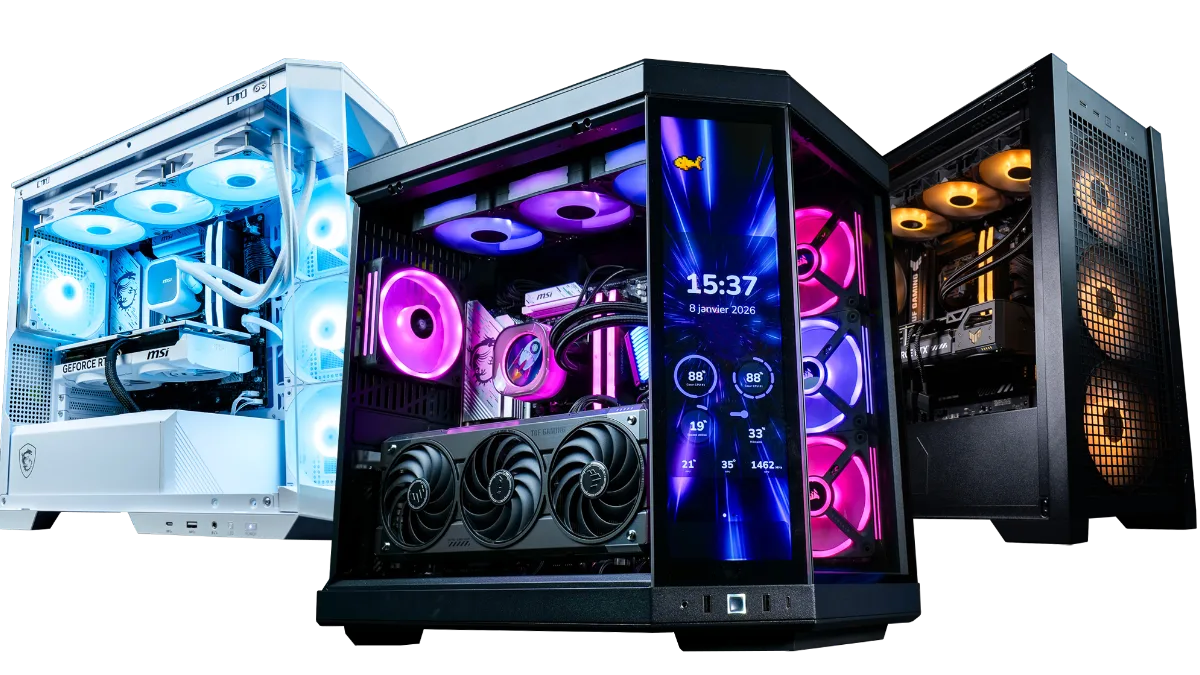
From Full HD to 4K: the graphics card makes the difference between the models in the range.
| Card | Video memory | CUDA cores | Memory bus | TGP | Required system power supply | Intended use |
|---|---|---|---|---|---|---|
| GeForce RTX 5060 | 8 GB GDDR7 | 3,840 | 128 bits | 145 W | 550 W | Full HD |
| GeForce RTX 5070 | 12 GB GDDR7 | 6,144 | 192 bits | 250 W | 650 W | 1440p |
| GeForce RTX 5070 Ti | 16 GB GDDR7 | 8,960 | 256 bits | 300 W | 750 W | 1440p Ultra and 4K |
Sources: NVIDIA, pages GeForce RTX 5060 and GeForce RTX 5070, consulted on 2 October 2026. The “Intended use” column reproduces the usage stated on our FlowUP product sheets.
Gaming PC RTX 5060: the right choice for playing in Full HD
An RTX 5060 gaming PC targets Full HD, which means 1080p gaming. According to NVIDIA, the card comes with 8 GB of GDDR7 and 3,840 CUDA cores, for a maximum power consumption of 145 W. It’s the entry point to the RTX 50 series, and it supports DLSS 4, including multiple-frame generation.
Its strength is the balance: moderate power consumption, a power supply that is easier to choose (550 W required for the whole system) and enough performance to play in Full HD smoothly. Its limit comes down to a single number: 8 GB of video memory. In our view, that’s the threshold you shouldn’t cross: beyond Full HD, or with very heavy textures, the margin disappears quickly.
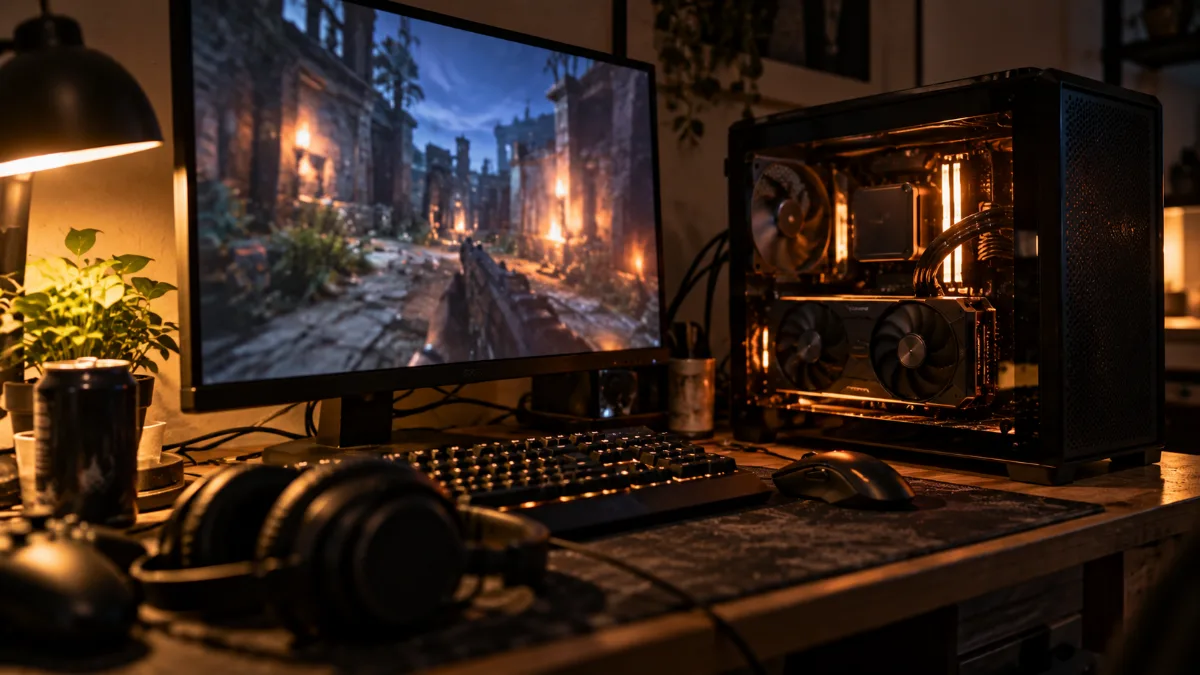
The RTX 5060 targets Full HD: a 1080p screen and a compact PC are enough.
Our pick: the Banger PC, built around an RTX 5060 and designed for Full HD gaming, including competitive play. It comes with a TP-Link Wi-Fi key, because Wi‑Fi is not natively built into its motherboard.
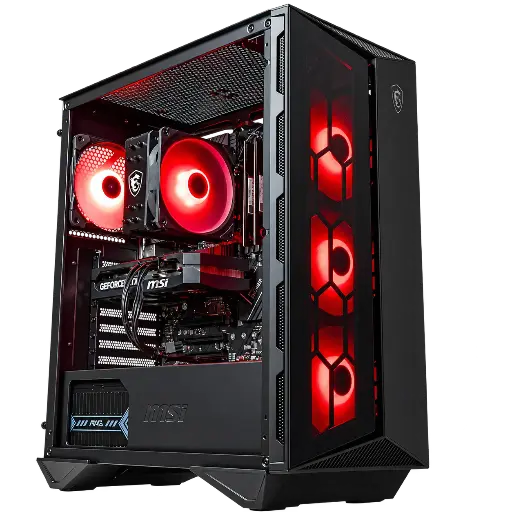
Banger PC, RTX 5060: the Full HD choice
A PC assembled, configured and tested by FlowUP for playing in Full HD, both solo and competitively.
Gaming PC RTX 5070: the balanced choice for 1440p gaming
An RTX 5070 gaming PC is the most balanced choice for 1440p gaming. According to NVIDIA, the RTX 5070 offers 12 GB of GDDR7, 6,144 CUDA cores, a 192-bit bus and 250 W of TGP, with 650 W required on the system side. It supports DLSS 4.
With the same graphics card, two PCs can perform very differently, and that’s where the builder matters. In our listings, the Cheetoh pairs the RTX 5070 with a Ryzen 7 7800X3D, 16 GB of DDR5 and a Gen4 SSD. The Rivals pairs a Ryzen 7 9800X3D with 32 GB of DDR5 and a 1 TB SSD. The Novara combines a Ryzen 5 7500X3D, 16 GB of DDR5, a 1 TB SSD and an NZXT Kraken Plus 240 RGB watercooling system.
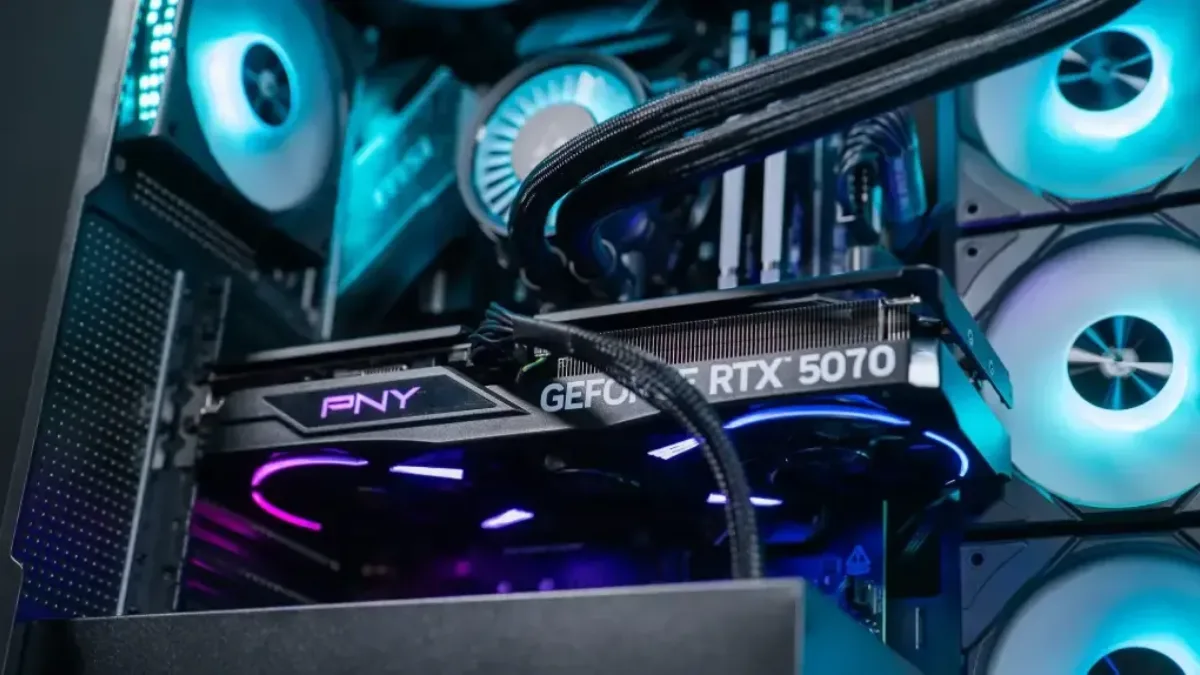
The RTX 5070 comes with 12 GB of GDDR7: the right compromise for 1440p.
A good rule of thumb: if you mainly play competitively, look at the processor. The three PCs above are based on AMD X3D chips, a family our Cheetoh sheet presents as a benchmark for gaming. If you also do streaming or multitasking, the amount of RAM matters even more.
Want the full verdict on the card alone? Read our article RTX 5070: review, price and comparison. The video below, by Mathis and Gauthier, presents an RTX 5070 gaming PC: the one on the Cheetoh product page.
Video by Mathis and Gauthier about a gaming PC with RTX 5070, presented on the Cheetoh PC page.
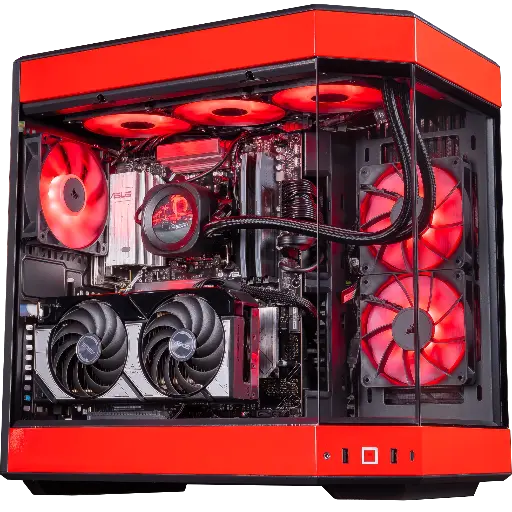
Rivals PC, RTX 5070: Ryzen 7 9800X3D and 32 GB of DDR5
A Ryzen 7 9800X3D, 32 GB of DDR5 and a 1 TB SSD around an RTX 5070 12 GB, to play in QHD Ultra.
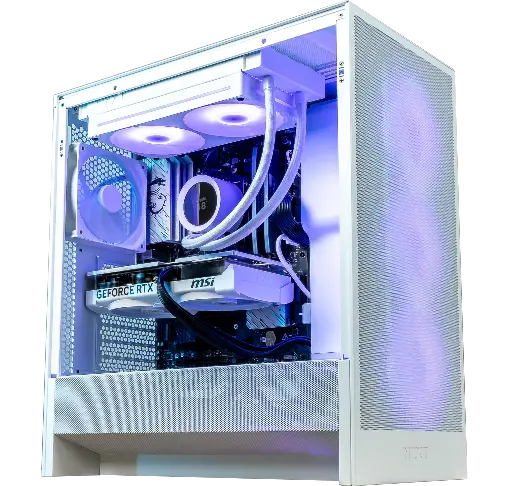
Novara PC, RTX 5070: Ryzen 5 7500X3D and water cooling
An RTX 5070 12 GB, a Ryzen 5 7500X3D, 16 GB of DDR5, a 1 TB SSD and an NZXT Kraken Plus 240 RGB water cooling system.
Gaming PC RTX 5070 Ti: room to breathe for 1440p Ultra and 4K
A gaming PC RTX 5070 Ti is for those who want a 4K gaming PC, or a 1440p Ultra experience without compromise. According to NVIDIA, the card comes with 16 GB of GDDR7, 8,960 CUDA cores, a 256-bit bus and a 300 W TGP, with 750 W required on the system side.
The 16 GB make the difference: it’s the video memory that limits first when you increase resolution with heavy textures. On its product page, our Abyssin PC is presented for 1440p Ultra and ready for 4K, with an Intel Core Ultra 5 245KF and a 360 mm liquid cooling system.
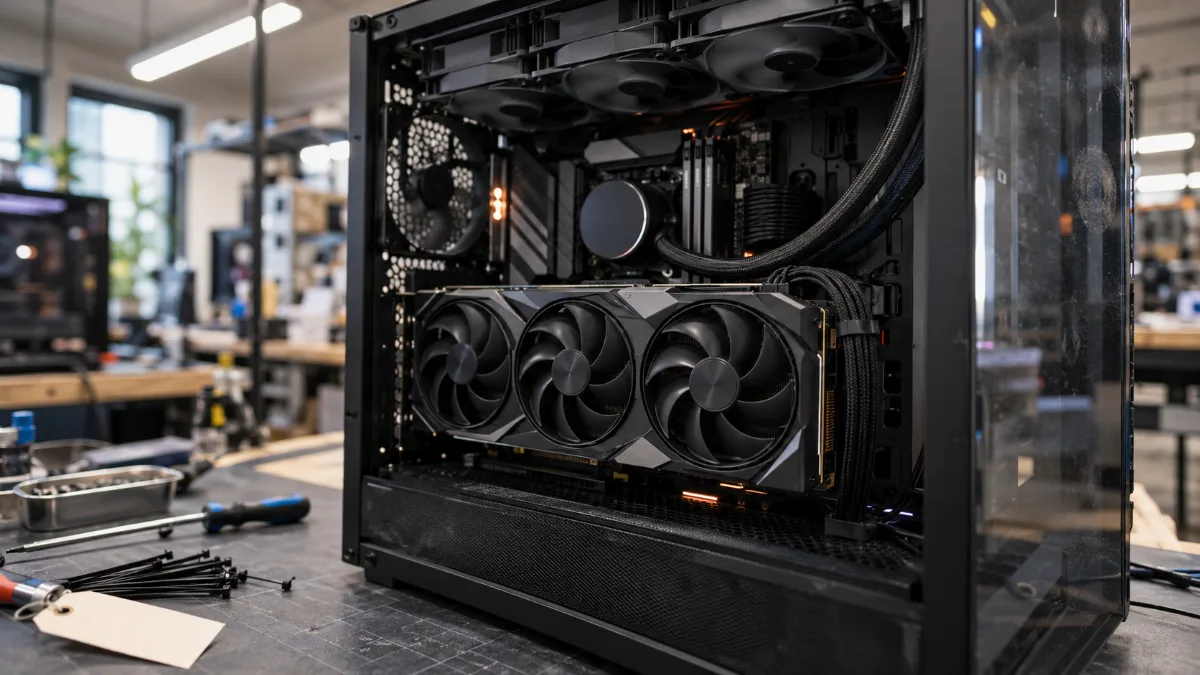
For 1440p Ultra and 4K, video memory and cooling matter.
A useful note: due to a global shortage, the RAM and storage brand and model for the Abyssin may vary depending on our stock, as indicated on its product page. Check it again when you place your order.
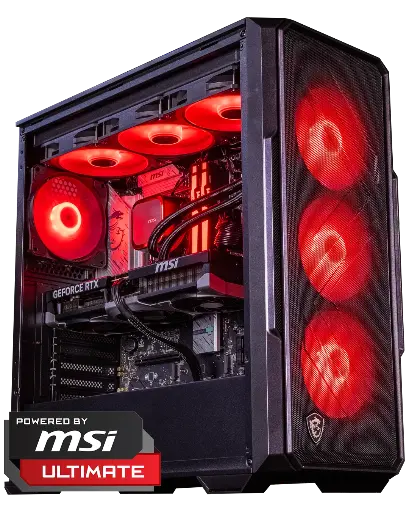
Abyssin PC, RTX 5070 Ti: 1440p Ultra and ready for 4K
A GeForce RTX 5070 Ti 16 GB, an Intel Core Ultra 5 245KF and 360 mm liquid cooling, for gaming, streaming and creating.
Video memory, DLSS 4 and recommended power supply: three concepts to know
Video memory (VRAM) is the memory built into the graphics card. It stores the textures and images being processed. The higher the resolution and the level of detail, the more it’s called upon: 8 GB for the RTX 5060, 12 GB for the RTX 5070, 16 GB for the RTX 5070 Ti.
DLSS 4 is NVIDIA’s set of image enhancement technologies. According to NVIDIA, it includes super resolution, ray reconstruction, frame generation and multi frame generation, supported by the three cards. It increases frames per second in compatible games, with an effect that varies from game to game.
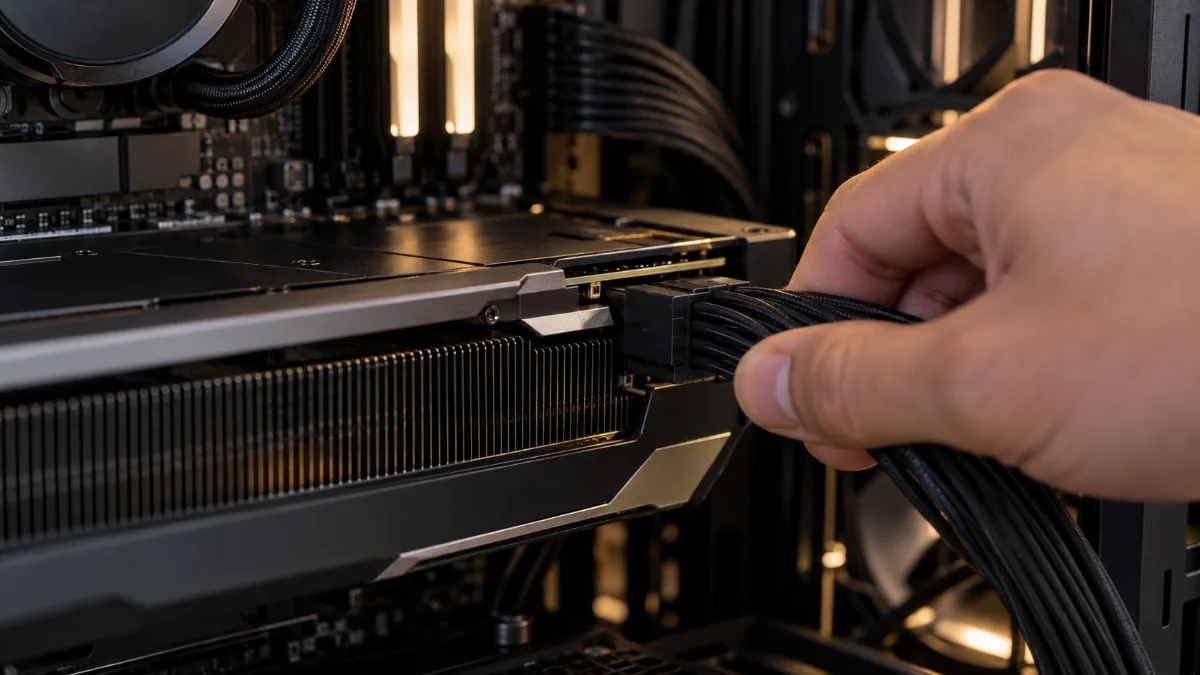
Plugging in the graphics card: NVIDIA’s numbers are the minimum.
TGP (Total Graphics Power) is the maximum power that the card can draw. NVIDIA also indicates the recommended power supply for the system: 550 W, 650 W and 750 W depending on the card. In terms of connectors, the RTX 5060 requires an 8-pin PCIe connector, while the RTX 5070 and RTX 5070 Ti require two, or a 300 W or higher PCIe Gen 5 cable. In a pre-built PC, the builder sizes the power supply; in a PC you build yourself, these numbers are minimums, so keep some headroom.
How to choose in three questions
First question: what is the resolution of your screen? In Full HD, the RTX 5060 is enough. In 1440p, the RTX 5070 is the balanced choice. In 1440p Ultra or 4K, the RTX 5070 Ti gives you headroom.
Second question: do you mainly play competitively, or do you play demanding texture-heavy games? Competitive gaming prioritises the processor and frame rate; texture-heavy games prioritise video memory.
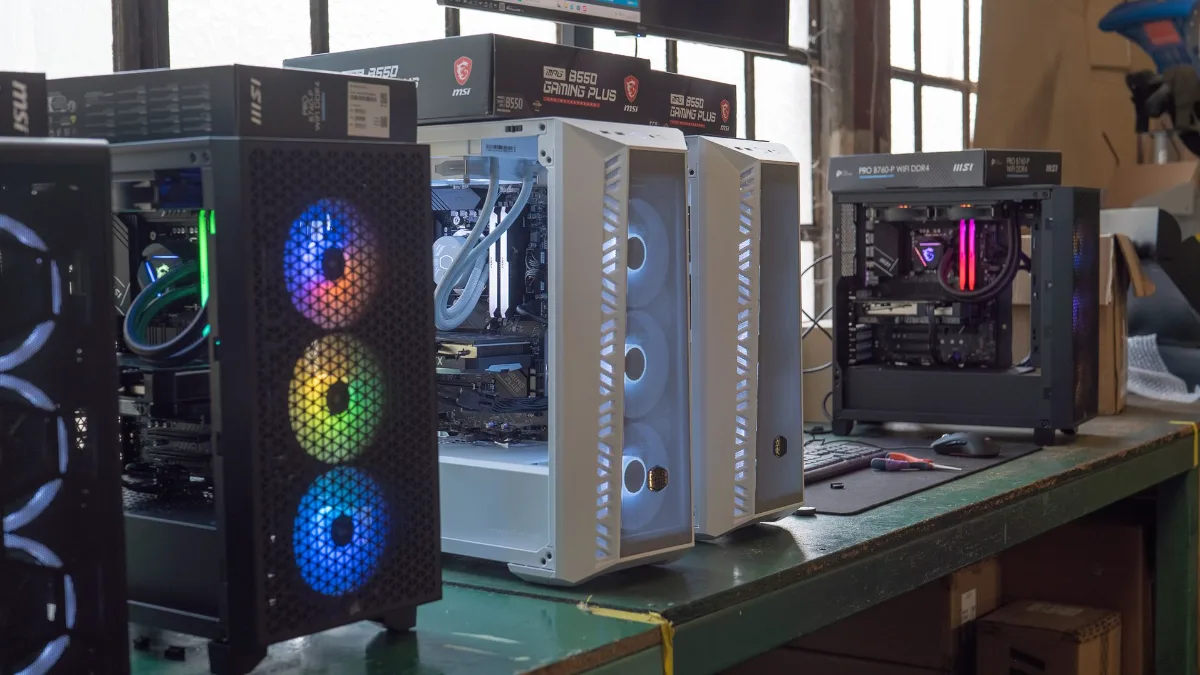
Each FlowUP PC is assembled and tested in the workshop before shipping.
Third question: are you planning to upgrade the PC? A higher-end graphics card and a generous power supply leave room for later. If you’re torn between two tiers, aim for the resolution you’ll want in two years, not just the one you have today. To match the card with a good processor, read our guide on choosing the right CPU and GPU combination, and for a complete overview, how to choose your gaming PC.
Frequently asked questions
Which graphics card should you choose to play in Full HD?
The RTX 5060, with its 8 GB of GDDR7, is designed for Full HD. That’s the card in the Banger PC.
Is the RTX 5070 enough to play in 4K?
The RTX 5070 targets 1440p. 4K is still possible depending on the games and settings, but the margin is more comfortable with an RTX 5070 Ti and its 16 GB of video memory.
How much video memory do you need for 1440p?
In our view, 12 GB (RTX 5070) is the balanced choice, while 16 GB (RTX 5070 Ti) leaves more breathing room when textures are very heavy.
What power supply for an RTX 5070?
NVIDIA specifies 650 W for the system with the RTX 5070, compared with 550 W for the RTX 5060 and 750 W for the RTX 5070 Ti.
Does DLSS 4 work on the RTX 5060?
Yes. NVIDIA lists DLSS 4, including multi frame generation, on the RTX 5060, the RTX 5070 and the RTX 5070 Ti.
Is a FlowUP RTX 5070 gaming PC ready to play?
Each PC is assembled and tested before shipping, with Windows 11 Pro preinstalled (trial version).
Sources
- NVIDIA, GeForce RTX 5070 Ti and RTX 5070, specifications (accessed 2 October 2026)
- NVIDIA, GeForce RTX 5060 Ti and RTX 5060, specifications (accessed 2 October 2026)
- FlowUP, product sheets Banger, Cheetoh, Rivals, Novara and Abyssin (accessed 2 October 2026)
