
By the FlowUP team, gaming PC builder in Genappe (Belgium) · Updated 29 September 2026
In brief: on a GeForce RTX, DLSS 4.5 (2nd-generation Super Resolution model, available since January 2026 on all RTX cards) delivers in 2026 the best image quality for upscaling, and Multi Frame Generation 6X has been available since 31 March 2026 on the RTX 50 series. On a Radeon RX 9000, FSR Redstone (since December 2025), followed by FSR 4.1 (March 2026, extended to RX 7000 in June), has significantly narrowed the gap. DLSS 5, released on 3 September 2026, is not an upscaler: it’s neural rendering, and for now it’s reserved for RTX 50.
DLSS, FSR, XeSS: what are we talking about in 2026?
These technologies do two different things. Upscaling calculates the image at a lower resolution, then reconstructs it larger using AI: you gain FPS without losing too much sharpness. Frame generation creates intermediate frames between two rendered frames: the display is smoother, but responsiveness doesn’t improve.
Each brand has its own version: DLSS on NVIDIA, FSR on AMD, XeSS on Intel. They’ve become indispensable with ray tracing, which is very demanding: to understand what they’re compensating for, read ray tracing and path tracing: what is it?.
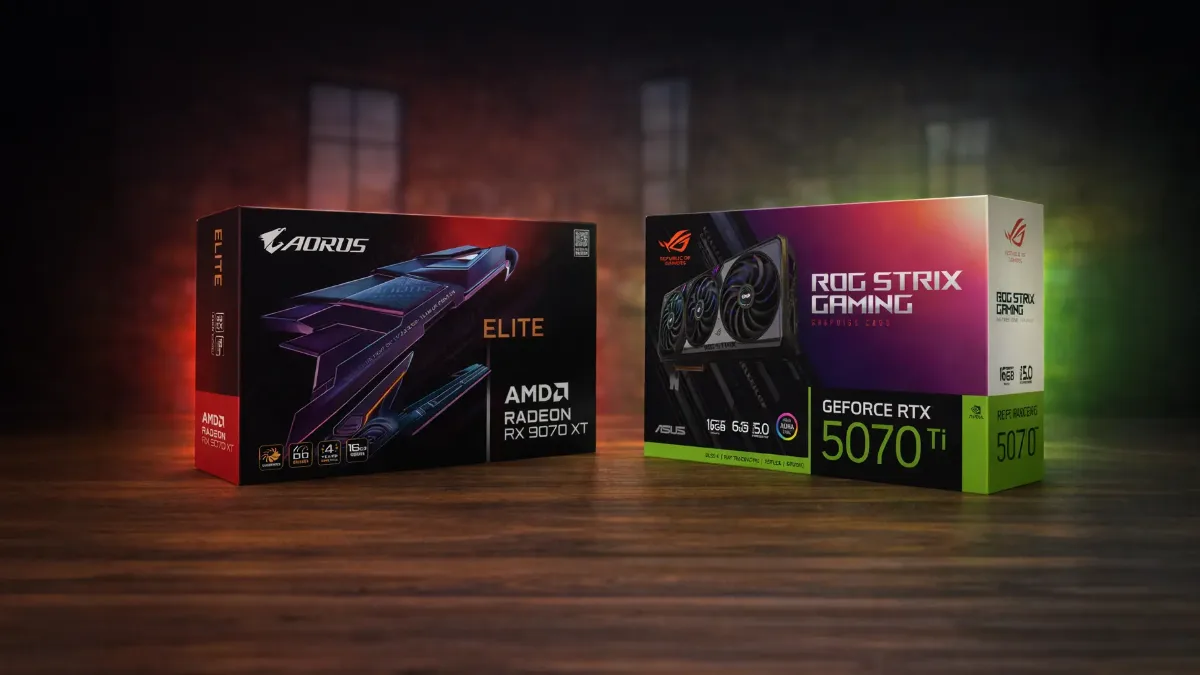
RTX 5070 Ti and RX 9070 XT: the DLSS vs FSR showdown is mainly on these cards.
The summary table, as of 29 September 2026
| Technology | What it does | Available | Compatible cards |
|---|---|---|---|
| DLSS 4.5 Super Resolution | AI upscaling, 2nd-generation transformer model | Since 5 January 2026 | All RTX (20 to 50) |
| DLSS 4.5 Multi Frame Generation 6X and dynamic | Up to 5 generated frames per rendered frame, automatic multiplier | Since 31 March 2026 | RTX 50 only |
| DLSS 5 | Neural rendering of lighting and materials | Since 3 September 2026 (NBA 2K27) | RTX 50, RTX 40 planned |
| FSR Redstone | ML upscaling (ex-FSR 4), ML frame generation, Ray Regeneration, Radiance Caching | Since 10 December 2025 | Full suite: RX 9000 |
| FSR 4.1 | Improved ML upscaling, Ray Regeneration 1.1 | March 2026 (RX 9000), June 2026 (RX 7000) | RX 9000 and RX 7000 |
| XeSS 3 | Upscaling and multi frame generation up to 4X | Since January 2026 | Intel Arc and Core Ultra |
Sources: NVIDIA (January, March and September 2026), AMD, Tom’s Hardware, Windows Central (December 2025).
DLSS 4.5: what changed in 2026
DLSS 4.5, announced at CES in January 2026, first brings a new model generation for Super Resolution: a more stable image in motion, less shimmering on foliage and fences, and fewer trails behind nearby objects. It works on all RTX cards, via driver 591.74 and the NVIDIA app, in over 400 games thanks to the “DLSS Override” option.
The second instalment, arriving on 31 March 2026 with driver 595.97: Multi Frame Generation moves to 6X mode and becomes dynamic, with the multiplier adjusting to match your screen’s refresh rate. This is reserved for RTX 50.
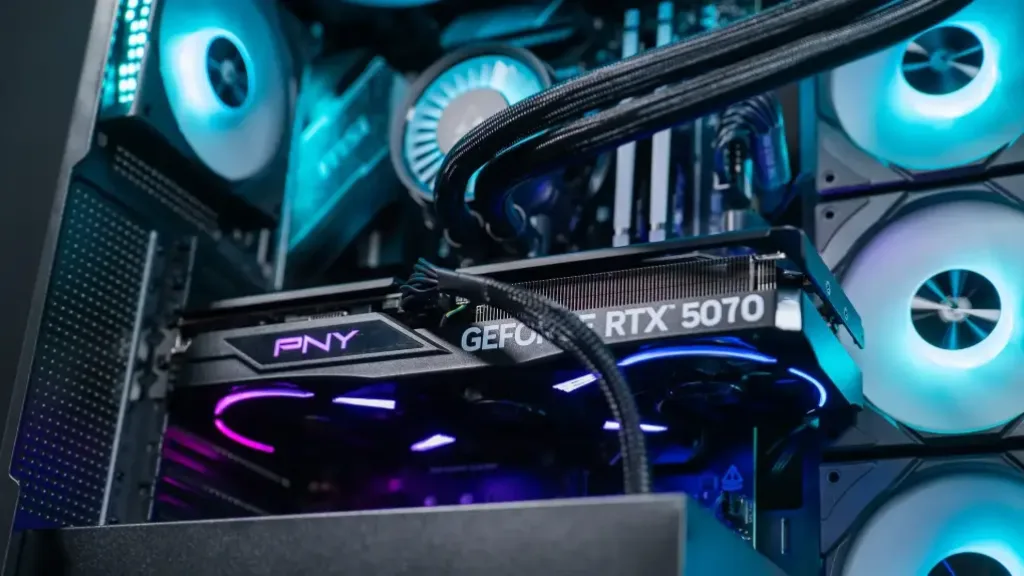
DLSS 4.5 Super Resolution works on all RTX cards, while 6X generation is only available on RTX 50.
Watch out for RTX 20 and 30: the new model requires significantly more computation, and these cards don’t natively support the FP8 format. NVIDIA acknowledges this, and community tests relayed by Tom’s Hardware measure a loss of about 20% compared to DLSS 4.0 on these generations. On RTX 40 and 50, the cost remains low.
How to enable DLSS 4.5
- Install a recent Game Ready driver (591.74 or later) and the NVIDIA app.
- In the Graphics tab, select a game or the global settings.
- In DLSS Override, set the Super Resolution model to “Recommended” (or choose the M or L model in custom mode).
- On RTX 50, also set the frame generation mode: dynamic, targeting your screen’s refresh rate.
- On RTX 20 or 30, compare your FPS: if the loss is too big, revert to the K model (DLSS 4.0).
FSR Redstone and FSR 4.1: AMD has closed most of the gap
Released on 10 December 2025 with the Adrenalin 25.12.1 driver, FSR Redstone bundles four functions based on machine learning: upscaling (the renamed FSR 4), AI frame generation, Ray Regeneration (denoising of ray tracing), and Radiance Caching. At launch, more than 200 games benefited from at least one of these functions. The full suite is reserved for RX 9000.
In March 2026, FSR 4.1 refined upscaling, and then AMD rolled it out to RX 7000 in June 2026, with a model tailored for more than 300 games. Useful precision: as of 29 September 2026, there is no official “FSR 4.5”; the latest version is FSR 4.1. AMD has also not yet released a multi-frame generation generation on PC.
DLSS 4.5 or FSR 4.1: which has the better image?
Independent tests from 2026 point in the same direction. For TechSpot (February 2026), DLSS 4.5 generally produces a better image than FSR 4, to the extent that DLSS 4.5 in Performance mode can sometimes match FSR 4 in Quality mode, but it costs a little more performance. FSR 4.1 is sharper than FSR 4.0, but still trails behind DLSS 4.5 (TechSpot, March 2026). And in ComputerBase’s blind test (May 2026), DLSS 4.5 wins in six out of seven games against FSR 4.1, with many voters who don’t notice any difference.
This French comparison shows the gap in the most demanding mode: Ultra Performance:
Le Bon, la Brute et le Geek, “DLSS 4.5 vs FSR 4: Ultra Performance, test and results” (January 2026).
Our take: the image gap does exist, but it shouldn’t be the only factor in your graphics card choice. An RX 9070 XT with FSR 4.1 remains an excellent card, on par with an RTX 5070 Ti without ray tracing, according to Tom’s Hardware. DLSS makes the difference if you play a lot with ray tracing and in 4K. The full face-off is in AMD vs NVIDIA in 2026.
And what about DLSS 5?
Announced in March 2026 and released on 3 September 2026 in NBA 2K27, the DLSS 5 does not replace DLSS 4.5: it’s neural rendering, which uses AI to generate more realistic lighting and materials. For now it’s reserved for RTX 50 cards, and NVIDIA has announced it plans to extend it to RTX 40 cards, with no date yet. Comparing “DLSS 5 and FSR 4” therefore means comparing two different things: AMD has no announced equivalent to date.
Our recommended settings
| Usage | Upscaling | Frame generation | To know |
|---|---|---|---|
| Competitive FPS (Valorant, CS2, Fortnite) | Quality upscaling or native | Disabled | Frame generation adds latency |
| Single-player at 1440p | DLSS 4.5 Quality or FSR 4.1 Quality | If you’re already around 60 FPS | 144 Hz screen or higher recommended |
| 4K with ray tracing | DLSS 4.5 Performance or FSR 4.1 Balanced | Yes (dynamic MFG on RTX 50) | The best way to use these technologies |
| RTX 20 or 30 | Test DLSS 4.5, otherwise use the K model | DLSS Frame Generation not available (FSR 3 possible depending on the games) | Check the FPS cost |
The golden rule of frame generation: it turns 60 FPS into displayed 120 or 240 FPS, but it will never make a game running at 30 FPS feel snappy. Start from a healthy baseline.
Gaming PCs ready for DLSS 4.5 and FSR 4.1
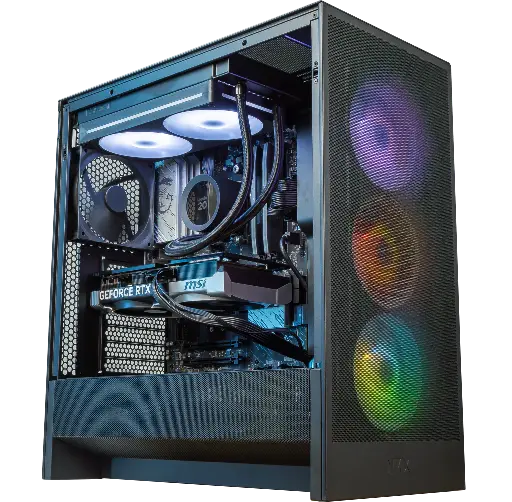
Velaris PC GeForce RTX 5070 12GB
Ryzen 5 7500X3D, RTX 5070 12GB, 16GB DDR5 and 1TB M.2 SSD: a ready-to-play setup straight out of the box.
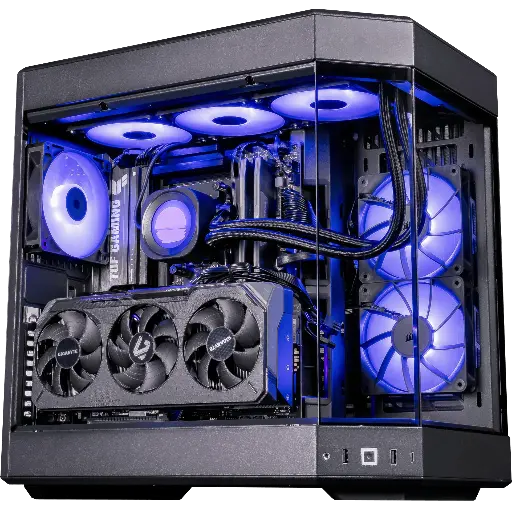
Shadow V2 PC, Radeon RX 9070 XT
RX 9070 XT and Ryzen 7 9800X3D: the full suite of FSR Redstone and FSR 4.1.
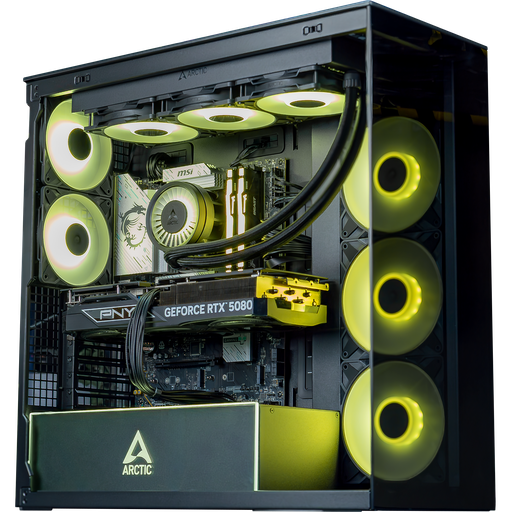
To find out everything about NVIDIA cards, also see the RTX 5000 series in detail.
FAQ: DLSS vs FSR in 2026
Is DLSS 4.5 available on all RTX cards?
DLSS 4.5’s Super Resolution, yes: all RTX cards, from RTX 20 to RTX 50, with a higher performance cost on RTX 20 and 30. 6X and dynamic frame generation is reserved for RTX 50 cards.
What is FSR Redstone?
AMD’s suite of technologies released in December 2025: AI upscaling (ex-FSR 4), AI frame generation, Ray Regeneration and Radiance Caching. The full suite works on Radeon RX 9000.
Does FSR 4.5 exist?
No, not officially as of 29 September 2026. The latest version is FSR 4.1, released in March 2026 on RX 9000 and in June 2026 on RX 7000.
DLSS 5 or FSR 4: which is better?
They don’t do the same thing. DLSS 5 is neural rendering (lighting, materials), while FSR 4 is an upscaler. For upscaling, the relevant comparison is DLSS 4.5 vs FSR 4.1, and DLSS keeps a slight edge in image quality according to the 2026 tests.
Does frame generation increase latency?
Yes, slightly. It makes the display smoother without improving responsiveness: reserve it for single-player games that are already around 60 FPS, and avoid it in competitive play.
Sources
- NVIDIA, Game Ready DLSS 4.5 driver (January 2026)
- NVIDIA, the rollout of Multi Frame Generation 6X and dynamic (March 2026)
- NVIDIA, announces DLSS 5 (March 2026)
- Tom's Hardware, DLSS 5 launches (September 2026)
- Windows Central, release of FSR Redstone (December 2025)
- Tom's Hardware, FSR 4.1 on RX 7000 (June 2026)
- TechSpot, DLSS 4.5 vs FSR 4 (February 2026)
- ComputerBase, FSR 4.1 and blind test (May 2026)
- Tom's Hardware, the cost of DLSS 4.5 on RTX 20 and 30
- The Good, the Bad and the Geek, DLSS 4.5 vs FSR 4 (YouTube)
